
Hifude Napandu (Name not real) just like any other Ugandan heeded to the call for registration to vote and the subsequent one of getting a National ID. As part of the process, his photo and fingerprint information was taken, much to his excitement considering that an opportunity to appear before a camera has always been a priviledge all his life.
Hifude happens to be a peasant farmer from Hisega in Butaleja district who dabbles in a number of activities in order to make ends meet. Farming, however, is his primary activity. His work is largely labour intensive and sees him employ his hands and feet for maximum productivity. One day, long after registration, as he was out in his garden preparing the land by burning the maize stalks and grass, he had to handle pieces of red hot charcoal, a product of the scattered wood in order to set off fire in different isolated parts of his garden. In the process, the hot coals did burn his palms but the pain inflicted wasn’t enough to scare him off his mission. After all, over the years, he had developed a hard rough palm as an adaptive response to the nature of work he engages in.
Come voting day, Hifude walks to the polling station to decide the fate of his country. After enduring a two hour wait, his turn comes up for verification. The checks begin;
- National ID – Yes
- Voter Card – Yes
- Photo Match – Yes
- Fingerprint Match – NO !!!!!!
The following exchange ensues;
Polling assistant, “No, you cant Vote.”
Hifude, “Why?”
Polling assistant, “Because you have failed the match”
Hifude, “Which match?”
Polling assistant, “Fingerprint match. You are not who you claim to be.”
Hifude exclaims with a loud and dejected voice, “Shyedde!!! Koni gano agasaaja genda hutwiba ni huwona?” (Gosh!!! You mean these guys want to cheat us in broad day light?)
The largely peaceful line of voters became restless and agitated when they heard that one of their own was being denied the chance to vote due to a fingerprint mismatch. This caused concern among those present upon realisation that they too might fall victim of that fingerprint machine. Hifude’s protests were received with much support and in no time, the polling assistant was under fire to defend her decision. The policemen were called in to quell the situation but being only two at the polling station, they couldn’t do much to restrain the already agitated crowd.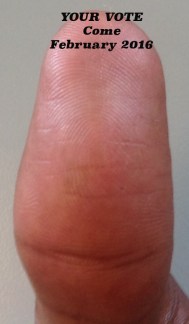
The above is a likely scenario in the upcoming elections going by the announcement of Uganda’s Electoral Commission to use Biometrics information to identify voters. Genuine voters are likely to be turned away if the officials insist on ensuring that one passes the biometrics test.
What could have made Hifude fail the fingerprint match?
- Hifude’s work is such that his hands get exposed to extremely rough conditions as he goes about his business. The hot coals he handled while in the garden could have had an effect on his fingers and distorted their ridges (similar to what would happen when hot water scalds your skin). Fingerprint scanners look at the arrangement, shape, size and number of lines, a combination of which ensures that every individual on earth has a unique set of these features. Therefore, anything that distorts the format of those lines (ridges) is likely to affect detection of an individual.
- Dirt, grease or any other contamination could have caused the mismatch. Fingerprint devices capture each and everything on your finger as you are being verified. Hifude being a man of the garden most probably came to vote after weeding in the morning and had contaminated fingers or he could have applied vaseline onto his body prior to heading out to vote and enough of it stayed on his hands.
But what is this whole fingerprint scanning and how does it work?
In brief, every human being has tiny ridges of skin on his fingers. This pattern of ridges and valleys on the fingers makes it easier for the hands to grip things just like the tire treads enable the tire to grip the road effectively. These ridges form through a combination of genetic and environmental factors. As a result, they are a unique identifier of individuals.
A fingerprint scanner therefore has two basic jobs, it gets an image of your finger and thereafter determines whether the pattern of ridges and valleys in this image matches that one in the pre-scanned images.
The Electoral Commission should be ready to register numerous mismatches in this regard simply because of some of the already mentioned causes as well as the fact that they can’t determine how well someone will wash their hands after eating a fatty meal, level of grease infestation of a mechanic’s palms, the wear and tear on the palms of a builder or stone crusher among others.
Kiggundu and his team need to exercise caution as they send out their teams by sensitising them on the possible challenges that this equipment is likely to face. Did you for example know that noise or flashing a light against a fingerprint scanner, heating up, humidifying, or vibrating the scanner outside it’s environmental tolerances can very easily cause an error in authentication?
Fore warned is fore armed. It’s time the limitations of this equipment are made known and fully tested to ensure that minimal surprises crop up in the field.
Ssagala Ssawulidde

