
Driving through Kyaliwajjala, Namugongo, Ssonde all the way to Seeta three days before the Martyrs’ day, I couldn’t help but notice the number of zealous pilgrims that were trekking from all corners of the country as well as outside Uganda. Elderly people of 80 years had trekked over 300Km to make this annual pilgrimage. To the un-initiated, Martyrs day is a celebration of the Christians who were killed between 1885 and 1887 under the orders of King Mwanga of the Buganda Kingdom. On 3rd June 1886 is when the largest number of martyrs, 26 in number were burnt to death at Namugongo.
Something else that caught my eye was the bee hive of business activity going on already. Along the roadside outside the venue, there were definitely over 2,000 traders displaying their goods for the pilgrims to purchase. Inside the venue, those selling food related products featured prominently too.
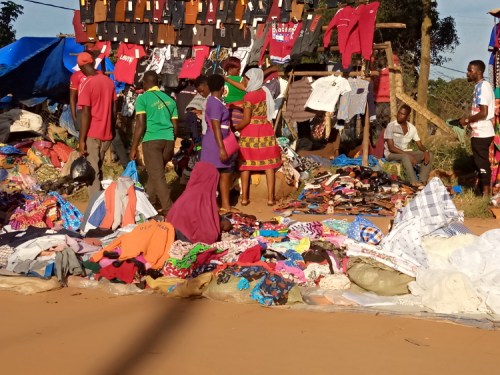
Road side traders at the Namugongo shrines
While watching UBC news, a reporter indicated that over 3.5 million pilgrims had officially registered by the evening of 2nd June 2019 which is the eve of Martyrs day. From a business sense, this is such a big opportunity. I was further overjoyed upon realising that most of the business operators at the Namugongo shrines were Micro business owners.
According to the Uganda Investment Authority, a Micro business is one that employs upto four people with an annual revenue of less than UGX 10 Million. Who are these micro business owners and how do they operate?
For the uninitiated, these are the traders you find in the local markets either with a stall or displaying their products on the ground at market entrances or alongside the road where cars park.
Others are mobile traders who move from market to market. If you have lived in the countryside, you know too well that there is usually one official market day in a week for the gazetted markets all over the district. This implies that most traders will follow the action and sell their products where the market day is. In Mukono for example, the open market day for Seeta Market is Monday and that of Mukono Municipality is Tuesday. It is the reason you are likely to find a lot of traffic jam around those areas on those specific days.
Another category of micro businesses are the opportunity seekers. These aren’t usually into full time business engagement but when an opportunity presents itself, they quickly marshal the required resources and make a quick buck.
The fact that the large more organised corporate business operations are a no show is a good thing because I doubt they would understand how to effectively deal with these pilgrims better than the micro business traders.
Let’s look at the figures. With at least 3.5 million pilgrims, some spending three nights while others one night only, we can assume that each pilgrim has to eat food, at the bare minimum. Budgeting two meals per pilgrim at UGX 2000/- each meal works out to a possible UGX 14 Billion spent on feeding alone. Then you have the assorted wares like shoes, clothes, plates, cups, memorabilia all being sold to the pilgrims. I can say with certainty that over UGX 25 Billion is transacted during this event. For most of this money to be earned by Micro businesses is an even better sign because it allows wealth to percolate to the bottom of the pyramid. I just hope that the authorities at the Shrines do not succumb to the temptation of big business and throw out these micro businesses.
The Ministry of Trade Industry and Cooperatives has simply fluffed around with the issue of micro and small businesses. They have for long only set their sights on foreigners even when all they are doing is come to Uganda and set up barber shops. I am highly suspicious about the ability of the technocrats in that ministry to comprehend the micro business segment. Recently they came up with an SME policy that looks all too flowery and promising but take it from me, the biggest achievement it had was the public launch. It shall be a miracle to see anything beyond that unless a donor comes with millions of dollars.
Until we understand how these micro businesses operate and facilitate them in an enabling manner, we shall not realistically grow this economy in an equitable manner. Factories in Kampala should not be used as a sign of overall national development. We need all Ugandans of working age to have an opportunity to earn, only then shall we all have belief in the growth of the economy.
James Wire is a Business and Technology Consultant based in Kampala
Follow him @wirejames on Twitter
Email – lunghabo [at] gmail [dot] com
 The Wire Perspective