
Uganda is a naturally gifted agricultural country. When you see the volumes of production under the largely subsistence approach that characterises our agriculture, the potential is immense. One sector whose potential has been proven is the Dairy Sector. It is therefore a pity that the successes registered on that journey have not been replicated for other agricultural sub-sectors.
In a this very well thought out article, Hon. Edward Baliddawa shares an opinion as to why Uganda needs to be deliberate about rice growing and it is within the same vein that I am reaffirming his point of view to show how there has either been negligence or a carefully crafted plan not to empower farmers in other sectors.
Dairy
Milk production in the country experienced a nose dive in the 1970s all the way through the 1980s. We relied alot on imports especially of milk products like powder milk, cheese among others. The Dairy Corporation used to collect and process 20 million litres of milk per annum in 1972 but this dropped to an all time low of less than half a million litres in 1983.
When the Government came up with the Diary Master Plan of 1993, it was a key turning point closely followed by the enactment of the Dairy Industry Act, 1998. As a result of these interventions, the industry monopoly enjoyed by the Dairy Corporation was removed, allowing other private players to venture into processing.
The Dairy production in Uganda is dominated by small scale dairy farmers who contribute 80% to the overall milk production in the nation followed by 20.0% from the large scale dairy farms. Their production is mainly based on low input traditional pasture production systems making the country one of the few low cost producers in the world.
Liberalisation of the sector has seen annual production grow from 9.3 million litres in 1990 to 2.81 Billion litres in 2021, just 200 Million litres shy of the anticipated 3 Billion litres target. This shows the high prospects the sector holds.
Today, numerous value added products from milk are exported to markets as far as Europe, Asia and the Americas. Thanks to the focused commitment to revamp the dairy industry in Uganda.
Rice
In Uganda’s Agricultural Strategic Plan (ASSP) after cotton, coffee and maize, rice is ranked 4th as a strategic crop for improving household food and income security in Uganda. While, in terms of production, it is the second most important cereal after maize.
Just like Dairy farming, rice is grown mainly by smallholder farmers strewn across in Eastern, Northern and selected parts of Western Uganda.
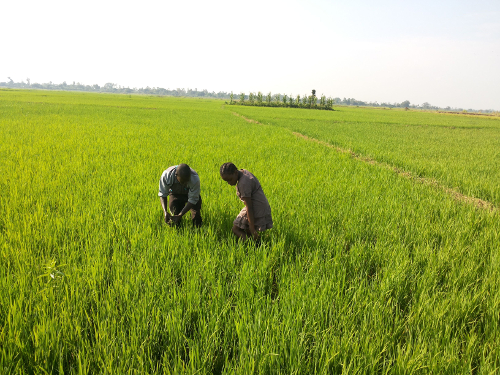
Despite having a production of 350,000MT of rice, Uganda remains a net importer. While we have a sizeable acreage of land under rice cultivation, our productivity per hectare pales in comparison with the immediate neighbors. As a country, our climatic conditions are favourable for rice growing and these among others include;
- There is readily available fertile land
- The two rainfall seasons that allow for the production of two crop cycles annually
- Decent average annual rainfall averaging 1,200mm/year
- Ideal temperature ranges
The challenges faced in the rice sub-sector are common knowledge and evolve around;
- Over reliance on rainfed agriculture hence exposing rice farming to risks of drought
- Limited access by the large small holder farmers community to improved seeds
- Limited use of proper agronomic practices mainly due to lack of knowledge.
- Poor post-harvest handling leading to low grain quality thereby lowering the potential income and limiting market access
- Limited Mechanisation
- Poor Supply Chain infrastructure like roads, proper transport for produce, warehouses etc
- Inadequate access to finance with farmers paying upto 100% interest through the informal money lenders.
It should be possible to propel the rice sub sector to the next level and turn Uganda into a net exporter of rice within a decade if only commitment can be shown in addressing the already known pitfalls.
The opportunities should also be another highly motivating factor and these include;
- The local and international demand for rice and its byproducts is growing steadily
- Rice enterprises are more profitable at the various levels of the value chain compared to other cereals like maize, sorghum and finger millet.
- There are relatively high gross margins across all stages of the value chain therefore making it easier to maximise returns
- The rice byproducts market is still highly undeveloped.
Measures have been undertaken to promote the growth of the rice sub-sector but either they are being implemented in a haphazard or half hearted way.
You wake up one morning only to hear drums sounding for the importation of tax free rice with someone blaming inadequate production and the poor quality of locally produced rice as a reason for allowing in the tax free imports. The same team of minds worked so hard over the decades to ensure that the quantities and quality of dairy milk produced in western Uganda improved immensely including the mindset change that led the pastoralists settling down.
What was done for the dairy sub-sector can be done in the rice sub-sector by;
- Encouraging the smallholder farmers to associate in cooperatives and benefit from scale
- Setting up appropriate infrastructure in the rice growing areas to make produce transportation much easier
- Setting up warehouses and encouraging their use
- Promoting investment into value addition initiatives
- Enforcing standards, among others.
It is therefore prudent that we use our success stories to uplift other sectors of the economy as opposed to addressing each with a silo approach. This therefore is a reminder call to the Ministry of Agriculture to handle all other key agriculture sub-sectors with the kind of attention that the Dairy Sub-sector got. Only then can we see a nationwide impact of progress reaching the bottom of the pyramid.
James Wire
Business & Technology Consultant
Twitter: @wirejames
Blog: https://wirejames.com





 The Wire Perspective