
Tag Archives: mobile banking

DFCU marches on


Resilience is defined as the ability of people, organisations, systems to mitigate, adapt to as well as recover from shocks and stresses. If there is a bank in Uganda that has shown its resilience in the recent past, then it is DFCU Bank.

Following the takeover of another local bank, the storms that the institution has had to wade through have not been easy. This was very evident in the media presentation of the bank’s performance over the year of 2018.

Some quick facts about the bank:
• With 65 branches across the country, it is the 2nd largest branch network.
• Over 420 ATMs access
• Over 600 Agent Bankers across the country
• Customer base of over 1 Million depositors
• Mobile banking App

Operating in a seemingly stagnant economy, the bank was able to show flashes of marginal improvement in a number of areas and this should be a cause for some celebration. It is a pity that always the profit registered is what most consider when rating the health status of a business. This should always be done in context though.

The role DFCU bank plays in promoting Small and Medium Enterprises is quite impressive. Through the creation of opportunities for the SMEs in the form of training as well as investment support, the bank has impacted on a section of the business community that is crucial to the local economy.

All through the presentations, I strongly noted the following as the key take home issues from the bank’s performance;
• There was a significant drop in reliance on third party borrowings
• The lower interest cost is a great sign of improved operational efficiency
• There was a remarkable growth in the income from other sources other than interest income.
• Improvement in the portfolio quality resulting in a lower impairment charge.
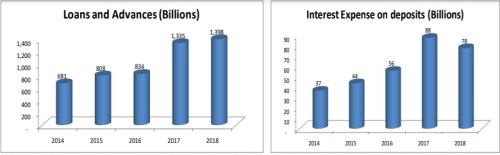
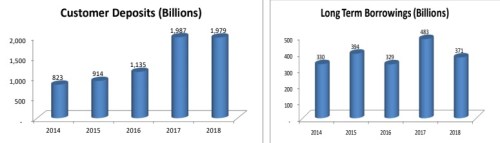
dfcu

dfcu1

Harbouring ambitions of being a market leader and technology driven financial institution, the journey has only just begun.

With a new MD in place, Mr. Mathias Katamba, I can only look at the future with more hope considering that DFCU bank is an indigenous bank that is rolling with the big global names in the market place.

James Wire is a Business and Technology consultant based in Kampala, Uganda

Twitter – @wirejames


Bye Bye Mobile Money


Twenty years ago, as a young graduate fresh on the job market, I had a job and each time my salary came, I would put aside some money to send to my parents in the village. Whilst I couldn’t visit the village monthly, I made an effort to do so every three months.

Each visit had the primary purpose of taking money to the old folks, after which other demands came up too. However, in hindsight, I realise that meeting them, talking and enjoying home grown food was a very big benefit that came with this quarterly pilgrimage. It usually took me close to 6 hours to make the trip to Butaleja as it involved taking a bus ride from Kampala to Mbale Town only to wait for over an hour seated in a taxi heading for Butaleja waiting for passengers.

Being a technologist, when we eventually embraced mobile technology and its subsequent innovations like Mobile Money, I was in awe. This time round, I didn’t have to make frequent trips to the village but also had an opportunity to send money at any time I felt like in a convenient manner.

Mobile Money (MM) has been fundamental towards my projects that I handle remotely especially in farming as it proved to be the most cost effective means on my part.

Come 2018, a proposal to increase taxes affecting the MM service is tabled in parliament. Without applying any basic reasoning, the Members of Parliament proceeded to approve it yet a few months earlier, they had been in support of the National Financial Inclusion Strategy (2017-2022) which stated thus; In 2015, only 16% of the population had a bank point of service within one kilometre of a home, whereas 54% of the population had a mobile money point of service within one kilometre.”

In 2015, there was one Mobile Money agent for every 185 adults while during the same period, only 3 bank branches existed for the same number of people.

The same strategy document underscored the fact that, Between 2009 and 2013 Uganda experienced a significant increase in financial inclusion and much of this was driven by the growth of mobile money from 500,000 registered users in 2009 to 7 million active users of mobile money in 2016. As of 2015, 31% of the adult population in Uganda had used mobile money in the past 90 days and was considered an “active” user. This places Uganda as one of the leading markets in the world in terms of mobile money usage.”

If on one hand you profess interest in increasing financial inclusion countrywide and them come up with prohibitive taxes on the other hand, it beats our understanding by far. Is it an attempt to throw the baby with the bath water?

Considering the significant increase in transaction costs that come up to nearly 6% of the funds transferred, I have had to make a tough decision.

I AM QUITTING MOBILE MONEY !!!!

Under the current dispensation of taxes that begun on 1st July 2018, I find it grossly unfavourable to use MM services for my transactions. It is time for me to consider a repeat of my money transfer practices of the 1990s.

It’s obscene for one to be charged UGX 50,000/= (USD 12.5) to transfer UGX 1,000,000/= (USD 256). I insist that principles of taxation call for fairness. Matters are worsened by the fact that as a Ugandan, I hardly see any improvement in the public services to warrant paying all these new taxes of which the #SocialMediaTax is another addition.

Apart from maintaining my Mobile Money account to buy Airtime, pay for Electricity and Water bills, I do not expect to transact i.e. pay out or receive money on my MM line starting 9th July 2018. Someone has to sober up.

James Wire is a Business and Technology Consultant based in Kampala, Uganda
Follow @wirejames on Twitter.
Email lunghabo [at] gmail [dot] com