
Driving home one evening, a salon car ahead of me belonging to a diplomatic entity in Uganda slowed down as we approached a small bridge at the bottom of a valley in Kiira Town Council. In an instant, I saw the driver throw out of his window a container wrapped in a plastic bag (kaveera). I suppose the container must have been plastic too, judging by its apparent light weight. My eyes followed the package only to see it end up in the water stream below that turns into a mini river whenever the rains display their potential. Hooting and flashing my car lights, I made an effort to make him aware about my discomfort over his action. Unfortunately, I doubt he got my point. It’s an act that has been deemed normal by many.
One can hardly walk for more than ten metres in any urban area of Uganda without coming across some form of plastic either being used by someone or littering the street. Plastics have become so commonplace that they are a significant component of our garbage today. Take time and check out the Nakivubo Channel and you’ll cringe at the amount of plastics that litter that waterway, to the extent that the city authorities placed metallic nets in the channel to trap them.
Did you know that plastics are also naturally occurring in space? Titan, the biggest moon of the planet Saturn was found to have a lot of propylene which is basically plastic.
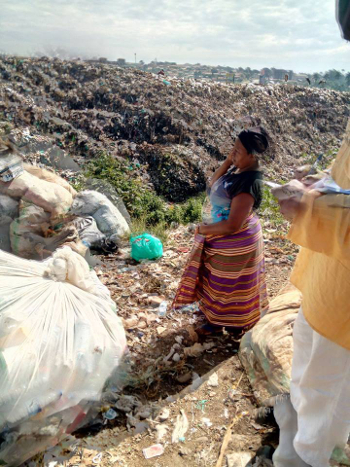
Garbage skip in Kireka, Kiira Municipality
Within Kireka town, just next to the railway line, there is this garbage dumping site that I have had the chance to visit. Plastics are practically littered all over the place making one wonder whether our homes yield more plastic garbage than the decomposable food waste.
Why are plastic products so popular today?
Love them, hate them, plastics have numerous benefits they bring into our lives hence ensuring their popularity and wide spread use.
Durability: Plastics are highly durable. In other words, they are able to resist wear and tear, decay among others. This effectively makes their usage potentially long term. They are designed to withstand tough conditions.
Cost Effectiveness: Without doubt, plastics are a much cheaper packaging material than metal, wood or even glass alternatives. This is more-so the case with those made out of petrochemicals. This is one of the reasons why the cost of some products like bottled water or soda is very consumer friendly. Try comparing the cost of a 300ml soda canned in a plastic and another in a glass bottle. The difference is obvious.
Design Freedom: Plastic offers a lot of flexibility for the manufacturers. The range of shapes, configurations, colourings, printing among others that can be enforced with plastics beats alternative materials like glass by far. This allows plastics to be moulded into bottles, trays, containers, carry bags, canisters, medical devices and much more.
Easy to Transport: Plastic containers are very easy to use when transporting products. They usually take up less space, aren’t fragile like glass hence not requiring special care during the process of transportation.
Light Weight: Being lightweight, plastic bottles or containers are preferred by many to pack food or carry drinks and the fact that they are available in all kinds of shapes, they meet the needs of nearly every one.
Safety: Plastics are shatter proof and even when they fall down, they hardly fragment into dangerous small little pieces like glass tends to do.
Re-usability: People tend to re-use plastics in very ingenious ways. During the rainy season, it’s common to see ladies using plastic bags to shield their hair from rain water. Some food joints targeting the bottom of the pyramid market tend to re-use mineral water plastic bottles to supply fruit juice to customers. As to whether some of these re-use cases are healthy, that’s a story for another day.
When all is said and done, there are numerous calls that have for long been made to ban plastics on grounds of their harmful effect upon the environment. Indeed the dangers of plastics are so grave but then again, their benefits are quite compelling too. Its kind of like a love-hate relationship that man has with them.
Have you ever walked along a suburb road after some heavy rain? You are greeted by a very big amount of plastic litter that has been washed from the various homes and dustbins by the rain water. It’s such an eyesore to those that love even the most basic form of orderliness. Interestingly, return after a few hours and you’ll hardly see the plastic trash.
Now that we are faced with this menace of plastics littering nearly every where we are, what should we do?
Until I visited the Plastics Recycling Industries (PRI) in the Nakawa Industrial area, I must confess that I was one of the proponents of a blanket ban on plastics. However, after seeing the massive potential in recycling plastics, my mind has since changed significantly.
One of the biggest answers to this conundrum is the need to Reduce, Reuse and Recycle plastics. We need to consider this three part approach seriously.
Reduce: Have you bothered to find out how much plastics you accumulate each day through your purchases and lifestyle choices? Each time you walk into a shop, the most obvious packaging they are likely to give you is plastic. Sometimes based on the products purchased, you are given multiple plastic packages for each item. Must you really get all of them? Could using a trolley to dump the purchases in the boot of your car be a better alternative?
Take the case of water. Each time you buy a plastic bottle of water or soda, it is usually dumped after use. Do you really need to buy that bottle each day? Can you for instance have a water bottle that you fill with water or juice each morning as you head to office? Can your office opt for those water dispensing cans that enable one use any cup available?
From a personal experience, when I begun separating my trash at home to isolate the plastics, I was amazed to find the huge amount of plastics we accumulated. The plastic trash was twice the size of the other waste within a span of two weeks. This led me to change our purchase habits with the aim of lowering our use of plastics at home. You too could do something similar.
Reuse: When confronted with plastics, it is important to always think about the possibility of reusing them. The habit of merely throwing them away contributes to their rapid accumulation in the environment. The plastic bags (kaveera) that we take home daily and just throw away can be reused the next time you go for shopping. Why not give that a try?
Plastic containers are reused in homes to plant flowers, vegetables and spices by backyard gardeners. This allows you to enjoy the health benefits that accrue through enjoying home grown foodstuff while also positively utilising a plastic that could have otherwise been discarded.
Plastic bottles have been used as construction material for low cost houses and they have proven their versatility in this.
Recycle: Finally, if you can’t reduce or reuse that plastic, the next option is to recycle. Discarding the plastic in a manner that ensures it is easily recyclable is crucial. While must of us lump up our garbage for disposal, it is vital that we started sorting it prior.
It’s not a Ugandan thing to be orderly when it comes to garbage but we need to develop the habit. I have found that cultivating a habit of separating decomposable from non-decomposable garbage is a good first step in the process of recycling. Many of the steps gone through by the recyclers would be skipped if only those of us disposing the plastics made an effort to do some basics. These include;
• As you dispose of the plastic, it’s a good idea to have it placed in independent bags from the rest of the garbage.
• Remove any labels from the plastic package if present.
• Separate the plastic bags (kaveera) from PET (soda and water bottles) and HDPE (jerrycans) plastics. Each of those has a different processing approach and a lot of man hours are spent by the recyclers doing just this separation.
• Rid the bottles or containers of any content like liquids and foods.
• Separate the bottle covers from the bottle as they are made of different material hence requiring separate processing approaches.
Plastics can be turned into a great opportunity for all.
Meet Kafeero (name not real) a 20 year old youth who spends the day traversing residential areas in Kireka and Banda searching for plastics from homes, business premises and open gutters. He then takes his collection to a Plastic4Cash collection centre which pays him for his collection per kilogram of weight collected.
Plastic4Cash are plastic material collection centres set up by Coca Cola in conjunction with the Kampala Capital City Authority. Anyone is free to take their collection of plastics and get paid. Primary sorting of the plastics is done here to ensure that unwanted material like rubber, stones and other substances do not find their way to the factory.
This centre then aggregates its entire collection and dispatches it to the Plastics Recycling Industries (PRI) another arm of Coca Cola that specialises in recycling plastics.
Upon arrival at the PRI, another phase of sorting occurs based on colour of the plastics as well as material type i.e PET or HDPE. The sorted plastics are then baled using some compactor machine to shrink the size of the containers and fit more plastics in a much smaller confined space. These plastics are then fed to a label remover to remove any paper or removable form of label present. It is after this stage that they are ready to go into the shredder. The shredder then tears the plastics into small thin strips of plastic that are washed clean and bagged for sale.

Coca Cola’s product sales dump 800 tons of plastics onto the market monthly. Uganda has numerous companies like Coca Cola that are doing the same. While it is hard to know the net amount of plastics by weight dumped onto the market monthly, a conservative estimate would put it at 3,000 tons (Three Mega Tons). PRI currently collects abut 250 tons monthly for recycling with a goal to hit the 320 ton mark this year.
This shredded or recycled plastic is indeed a potential income earner judging by the fact that in 2017 alone, recycled plastics exports hit the US$ 4 Million mark. This revenue can grow if only the collection of these plastics improved.
Having observed the entire plastics value chain, I can assure you that there are numerous individuals living off these plastics on a daily basis. The recycling opportunity has presented them with a chance to get into gainful employment and abandon their alternative and dangerous lifestyles.
Let’s do our part as consumers and make plastics recycling a reality.
James Wire is a Business and Technology Consultant based in Kampala, Uganda
Follow @wirejames on Twitter.
Email lunghabo [at] gmail [dot] com
Photo Credit: Mr Buwembo Joachim and Mr. Robert Oduori
Additional Resources
• http://blog.catalpha.com/what-makes-plastic-containers-so-popular
• http://www.recoup.org/p/185/why-plastic-why-plastic-packaging
 The Wire Perspective