
A week hardly goes by without being asked how much money it takes to start a business. On each occasion, I labour to explain why you just can’t sit and come up with a figure out of the blue.
Prior to August 2008, Mr. David Kabiswa was leading a near peasant life in Masaka district. As a wood curver, he made some income by selling crafts while complementing his meagre income with subsistence farming and occasional moonlighting as a teacher in a Primary school. Life was slow and money that others spend on an average shopping visit in a supermarket was a pipe dream to him.
One day, he was invited by a Women’s Group to an event in Kitaka, Nyendo. That is where he met a team from the Uganda Health Marketing Group and Base Technologies (now Barefoot Power Uganda Ltd). His interaction during that event earned him an opportunity to attend a Solar Micro Entrepreneur training that had been scheduled by Base Technologies. This training was a very big eye opener for him as he was able to realise the potential that lay in extending clean energy solutions to his rural environs.
Armed with UGX 110,000/= that August, Mr. Kabiswa invested in his first purchase of Solar Lamps to kickstart his new venture. What started as a ‘let me try and see‘ kind of activity turned into serious business which is now fully registered as Kabiswa Genuine Solar Solutions operating in over three districts with five branches located in Bukuya, Maddu, Bukomansimbi, Kiwangala and Bijjaba. Six years down the road, his operation earns him at least UGX 11,000,000/= (Eleven Million) monthly and offers direct and indirect employment to hundreds.
Now I know the debate begins here on whether actually he started off with what he claims or not. We could choose to get as detailed as we can if we want to, however, the moral of his story/experience is that from an insignificant financial investment he has been able to get so much. Just like a seed, what he invested has given birth to much much more.
We therefore don’t need to always focus on the financial outlay of our intended businesses otherwise we are likely to become non starters. Business is dependent on Opportunity and Resources. How well one harnesses the resources around them determines how far they get. It’s important for one to appreciate that money isn’t the only resource required to start a business. Resources come in-kind like skills attained, property, network of people, location among others.
Have you identified a challenge in your community? Are you passionate about addressing it? Let‘s take the case of the ever growing rural-urban migration. It has a direct impact on food demand and production. One might want to tap into the supply of beans since it is a commonly consumed sauce in Uganda. If you looked at the opportunity in its entirety, you’d stop dead in the tracks. Questions like;
- How much do I need to purchase the beans from the farmers?
- How will I store them and at what cost?
- How will I transport the beans to Kampala?
- What do I need to bypass all the traffic officers along the way that need bribes?
- Where will I store the beans once they reach Kampala?
- What sales outlet will I use to wholesale/retail the beans?
Depending on your mindset, you would be led to imagine that this opportunity requires at least UGX 15 Million simply because you are considering purchasing a tonne of beans for starters, hire/rent a store in the village, hire a truck to bring your beans to Kampala, hire a warehouse in Kampala to store the beans and finally rent a sales outlet. This might freak you out and cause you to either postpone implementation of the venture or abandon it entirely. Whenever you’re preoccupied with the money as you plan for that new business then know you aren’t ready yet. Don’t focus on the money, focus on the opportunity before you. Identify ways of pulling it off with the least use of financial resources as possible.
- Do you for example have a rural home with some empty rooms that you could use as a store for the purchased produce?
- Are there suppliers you can deal with on the basis of trust and pay them after selling off the products?
- Can you bargain for a discount when it comes to upfront cash payments?
- Can you partner with other produce dealers and share transport costs by hiring a single truck?
- Have you explored the option of reducing the initial quantities purchased?
- You could market your produce in advance such that its delivered to the customer(s) upon arrival in Kampala (This could save you urban storage costs)
From another perspective, you might be planning to set up a business in the City that offers services. Looking at your Business plan, the financial outlay could freak you out as it involves renting an office (6 months upfront rent), buying furniture, acquiring relevant licenses, hiring employees, day to day costs of the business, salaries, the list is endless. Don’t get held up by these figures. Think of ways you can avoid certain cost centres for starters. Case in point;
- If your customers don’t need to visit your office, can you operate without fixed office premises for starters?
- Do your parents, friends or acquaintances have an abandoned garage in their home that you can use as an operational base?
- Can you hold on hiring staff and carry out multiple tasks until the cash-flow situation improves?
- Can you opt for some cheap furniture especially through the second hand market?
- Can you use the online world especially social media to build your business and interact with potential clients?
- Can you get a friend with accounting skills to help you with finances on a pro bono basis in the meantime as you also counter offer them some services?
- You may consider parking that car and using public means to move around as you work.
- Consider scaling down on your personal expenses so they don’t hurt the potentially available money to incubate the business.

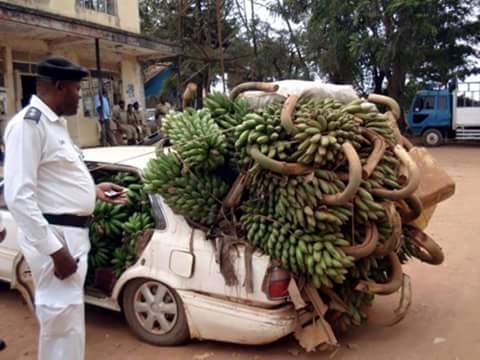
Business is usually rugged but there-in lies a crevice leading you to success
Will it be as easy as I just stated? Of course not. In such situations, one should be ready for a bootstrap approach. Spend minimally, delay the outflow of cash if possible, try as much as possible to sell on cash basis, you might be required to compromise on your comfort e.g. travelling on the back of the truck in the night as your cargo is making its way to Kampala, among other measures. They may seem mean but hey, who said entrepreneurship is a roller coaster? Its the reason we have more Worker bees than Queen bees.
St Francis of Assisi said, “Start by doing what is necessary, then do what is possible and suddenly you are doing the impossible.”
Mrs Enid Tuzaire a member of CELAC Bushenyi is an enterprising farmer who decided to save the UGX 2000/= that she had been paid as transport allowance to attend a workshop and use it for purchasing Tomato Seeds. She initially planted on a small piece of land but today boasts of 5 acres of Tomatoes.
“If you believe in yourself, anything is possible,” once said Miley Cyrus.
Don’t be bothered by the money. There are always ways around it.
 The Wire Perspective