
The year 2016 begun in an uneventful manner, just like the previous years of my life save for the fact that it would culminate in a life changing exam, the Primary Leaving Examination. The last time I had sat for this exam was in 1986 (30 years ago to be precise). Here I was, once again, faced with the daunting task. This time round though, I was doing it by proxy through my fist born son, Walter.
I hope my experience will offer other parents vital guidance on how to help their children go through the candidate year of Primary 7.
First we begun by training the young man how to read on his own in the night (usually from 8pm till 10pm in the night) and this started off in Primary 6 first term. All through P.6, with my wife, we made a great effort at ensuring that he plugged the gaps in his knowledge of various topics. Our emphasis was not to have him cram but understand and actually appreciate the topics from a broad and practical perspective. This definitely made our work more painful but we figured that the earlier we made him develop a broad databank of knowledge, the better.
Fast forward to P7, we begun the tortuous year. However, we didn’t want to make it a dreaded year for him. Actually, our goal was to make it as life changing as possible in all ways while also ensuring that he looked forward with anxiety to his right of passage to Secondary School.
The usual self study in the evening after doing homework was maintained albeit ending an hour later than what he was used to, with an addition of short tests that we set for him at least twice a week during the first term. We would then review his weak areas and help him out.
One discovery at this stage was the Youtube learning videos. We were able to find a lot of videos that taught crucial topics and by watching them on the home TV, not only did the learning style change but it turned out to be more impactful. From someone who had issues Converting Bases, calculating Square Roots among other weaknesses, the young man was able to up his game in no time. That is when I went on a spree and downloaded numerous videos addressing the various topical areas in English, Maths, Science and Social Studies.
Come end of the first term, we still had a challenge of getting him to appreciate that he was a candidate and therefore needed to start acting like one. Being the boy he was, the same old playfulness hadn’t yet left him. He only read in our presence and once we left, he would switch to other activities.
By the close of the first term, we had borrowed a stash of past papers from a close family friend whose daughter had completed P7 two years earlier. Revising these papers complemented those that we set for him. The journey continued through the Second term with a rundown to Mock Examinations. Walter begun showing some bit of response towards his candidature but a lot was still lacking.
When the second term ended, we cooked up an idea of taking him for some holiday studies (a move I have always detested). The major reason for this was our observation that while he was knowledgeable enough to sit for the exams, he lacked in areas like answering techniques, question comprehension (lately, lots of tricks are used to twist questions around), handwriting, among others. Unfortunately or is it fortunately, his school is one that doesn’t believe in using the rod against children even when they persist in not showing improvement in certain areas of weakness.
I then called up a cousin of mine who tutors a small little known school in Mukono Town that registers a high success rate at PLE. After chatting with him, a decision was made to enroll him there for holiday classes. This is when the real tuning for PLE begun. Not only are they meticulous at grilling kids to pass exams (cram work inclusive) but they happen to be disciplinarians who believe in the power of the rod to change children.
Within a week at Good Hope Primary School, Walter was able to realise that he is privileged enough by virtue of where he studies from. The benches at Good Hope were not only too uncomfortable but so was the lunch served which was standard Posho and Beans or porridge, a far cry from the burgers, chips and biryani at his school. He also got to appreciate the seriousness with which other pupils take PLE. The laid back attitude that he and his schoolmates had for PLE was all of a sudden exposed.
By the end of the second term holiday, I could see a change in the young man for the better. However, I realised that he needed to polish up a lot when it came to techniques. Besides, the harsh approach to marking of tests at Good Hope helped him also realise that if he was to pass UNEB well, he needed to stick to certain guidelines while answering questions. The teachers in this neighborhood school seemed to understand this well. After all, they train their pupils largely to purely pass exams; as to how they fare years down the road, only God knows. I then decided that he continues studies at this school for some more time during the third term before returning to his official candidate school.
Now for the grueling part. During the third term, Good Hope P.7 children have a programme that sees them start class at 3:30am ending at 10:00pm in the evening from Monday to Saturday. Sunday is the only rest day. I had to ferry the young man daily as early as 3am to school, get back home, prepare myself for the day and then take the younger ones at 6am on the one hour trip to their school. Upon return in the evening, I had to then pick up the candidate at 10pm in the night. Over the past two decades, I have not had such a stressful, tiring period like those two weeks in third term that my boy spent at that school. During all this, we always had open talks and I noticed that he appreciated the extra mile that was being taken by us to ensure he passes PLE.
Eventually, he returned to his candidate school and resumednormal studies albeit with a much more mature and changed mindset. He now knew the goal he had to attain and used to read on his own till late in the night. At this point, we concentrated on question answering techniques like interpretation, organisation of work, handwriting among others. I am more than convinced that most children fail PLE due to poor techniques.
The message I continuously shared withWalter was; “We are reading like this because PLE demands that you do so if you are to go to your first choice school. The way exams are marked lately is less about rewarding knowledgeability and more about encouraging cram work. So, let us gather the right techniques to help you pass, after all you are already knowledgeable.”
Are you a parent with children in Primary school? These are some of the tips I have to share with you:
-
Start engaging your child and taking keen interest in their academics at least as early as Primary Four, if possible, even much earlier. Ensure they learn as much as possible while not yet under pressure of national exams like PLE.
-
Expose your child to other school settings in order to gauge their abilities. You see, different schools have different strengths and weaknesses. When I took my son to that local neighbourhood school, the weaknesses that had been perpetuated by his school were exposed in no time.
-
Actively play a role in your child’s learning. Show them you are interested and genuinely care. You might want to replace some of those trips to the swimming pool with visits to the Wildlife Education Center, a farm (if you have one or know who has one), village retreats etc. They learn a lot from such experiences. I do not for example have to teach my kids about mulching and various farming practices because we do practise that at home in the garden on a daily.
-
Get the child to realise that while studying is fun, its also a serious engagement that demands very serious attention from the pupil. This is one challenge many middle class parents are likely to face due to the comfort zone their children are always in. I always urged my son to Read Like an Orphan.
-
Start preparing for PLE as early as Primary Six first term. Ensure the child does a lot of study especially in topical areas of their weakness. Do not subcontract this because some coaching teachers are merely money makers. By perusing through their assessment tests, you can identify these weak areas easily. Keep increasing the heat of preparation slowly but significantly for every subsequent school term.
-
Past papers. Gather as many past papers from different schools as possible. Right from P5 to P7. The final PLE usually consists of at least 75% from the P5 and P6 curriculum. Examine your child with them and revise jointly if need be. It is a sacrifice you have to make. Do not put your trust entirely in those coaching teachers.
-
Try utilising modern forms of delivery like multi-media. I found it much easier to teach my children about Mountain and River formations using Youtube Videos. During the pre-PLE week, watching Science videos on the Eye, the teeth as well as mathematical videos on Volume of cylinders, prisms and the like helped the young man a lot. When he met the questions in the final exam, it was just a roll over for him.
-
Motivation. Work out ways of motivating your child to read hard. You know them best (in case you do not, then better find out what drives them). Show them the Holy Grail and give them a reason to yearn for it. In my case, the Holy Grail was, qualifying for the first choice school.
-
Last but most important is Prayer. In life these days, one ought to go spiritual otherwise “tojja malako” (you won’t achieve much). Teach your children how to pray and then join them in the exercise regularly. Get the child to appreciate that above all the physical preparation you have engaged in for the exams, there is a spiritual layer that can only be handled spiritually.
My focus now turns to Nina. She is in Primary Six. We’ll touch base at the end of 2018.
Wishing you luck.
Follow @wirejames on Twitter
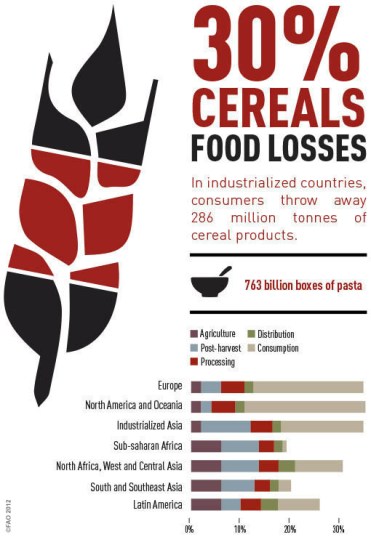 According to FAO, over 90% of the food loss across the Agricultural value chain in Sub-Saharan Africa is at the pre consumption level (growing, post-harvest, processing and distribution) with the consumption level contributing less than 10%.
  The Wire Perspective