
If there is one thing I have respect for Kampala’s middle class, it’s their quick adoption of anything regarding healthy living. There was a time when the social status of someone was directly proportional to their weight. The bulkier you were, the higher the social standing you had.
We then got introduced to the world of Gym, Sauna and Steam bath. It became the rage around town. Someone worthy their corporate pedigree had to be seen to have a sauna/steam bath as part of their daily programme. The consciousness of weight loss begun at this stage. However, most of the disciples thought that they would still maintain their beer swigging, chicken and pork eating habits expecting the sauna to automagically take away the weight.
The sauna era then paved way for Jogging. To-date, jogging is still taken seriously with groups of drinking buddies or even corporates coming together once or twice a week to jog a couple of kilometers.
While this was going on, we were ushered into the era of Juicing !!!!.
What is Juicing? Juicing involves a process where the natural liquids, vitamins, and minerals are extracted from raw fruits and vegetables, this process strips away any solid matter from the fruits and vegetables and you’re left with liquid only.
Everywhere I turn lately, a friend or two are talking about juicing. They share marvelous stories of how it has changed their lives, how they’ve lost weight, the elderly have seen their ailments reduce, alcohol filled bodies have been successfully detoxed etc.
While I’m in awe of all these testimonies, I want to share a few pointers on the likely dangers a juicer would expose themselves to in Kampala.
The average urban shopper will purchase their vegetables and fruits from the traditional local markets, Supermarkets as well as roadside sellers. Often times the presentation of these products is so attractive that one can hardly question their origin.
However, a few disturbing issues are rife in Uganda’s farming communities and unless urgent attention is given to them, the consumers will bear the brunt through unintended food poisoning as well as disease accumulation.
Issue 1:
It is a fact that the presence of banned pesticides is rife in this country. This was in part brought about by the liberalisation of agro-chemical inputs which weakened quality control. Chemicals are banned for various reasons, majority of which are health side effects on humans. More insights on this can be got in this article.
Issue 2:
There is widespread indiscriminate use of pesticides. Once I went to the market and out of curiosity asked the tomato seller why the tomatoes had a whitish substance on them. She confidently told me that the substance was a pesticide sprayed after harvest to increase the shelf life of the tomatoes as well as prevent pest attacks during storage. I did corroborate this assertion with a friend that operates a retail shop.
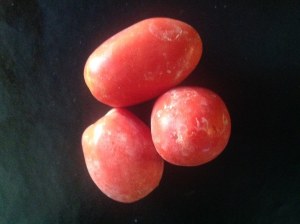 Standard agricultural practice does not recommend applying any pesticides to crops due for harvest within two weeks. This is due to the time it takes for the chemicals to breakdown and avoid entry into the human body. A 2013 Study among tomato farmers in Uganda found that no farmer was applying the recommended concentration of Dithane M-45. Their application varied from 3-7 times the recommended levels. This same Dithane is the one sprayed on the tomatoes after harvest. Its widely used on other crops like lettuce, onions and potatoes. Its active ingredient mancozeb is a known hazardous air pollutant and could cause cancer. It is known to have thyroid effects and when ingested by pregnant women can lead to impaired cognitive function and motor development in children.
Issue 3:
Storage of Fruits and Vegetables by most vendors is questionable. On an early morning trip to Buikwe district, I once found some vegetable vendors retrieving their greens from the irrigation canals of the Lugazi Sugar plantations where they had been stored overnight. As an avid user of this route through the plantation, I know how intense the use of chemicals when growing these sugarcanes is. For someone to keep vegetables there implies that they get into contact with these chemicals and the unsuspecting public become the victims of any health side effects.
It is also common knowledge that some vendors of fruits and vegetables in Kampala often store them overnight in water bodies like the Nakivubo channel among others. These are the very fruits you will gladly ingest raw after being nicely spliced and strategically positioned by the road side on a hot day.
Issue 4:
The relevant government agencies lack the ability to monitor pesticide residues in agricultural products. This is one of the reasons why we always wake up late when the EU is banning our produce. Farmers and agro chemical dealers are operating in an unregulated environment and it has become a dog eat dog world. They don’t seem to bear concern for the wellbeing of the food consumers.
What does all this mean to a Juicer?
Since juicing largely involves consumption of raw fruits and vegetables, the chances of one ingesting harmful chemicals while at it is high if they do not have knowledge of the source of the foods they are consuming. Take it from me, you can shop from the trending supermarkets or grocery shops and the agents there may convince you that their suppliers are carefully selected and regulated to ensure you get top notch products. As an individual that knows quite abit about the agriculture value chain, those are mere lies. Many of these retailers have no idea about the practices of their suppliers when growing the produce. All they see are clean vegetables and fruits presented to them.
As you juice, I advise that you consider growing your own stuff. Most of these vegetables and fruits can be grown in your backyard (if you’re serious) and the beauty is that there are groups like the Backyard Gardeners that have a good support network on WhatsApp.
If you aren’t ready to grow your stuff, then start today and scout for a good vegetable/fruit grower who is ethical enough to meet your expectations.
Otherwise, in the pursuit of great health, many are risking even worse ailments by merely jumping onto the bandwagon without assessing the dangers.
Happy Juicing.
Follow @wirejames on Twitter

