
Five Reasons why Supermarkets fail in Uganda


The craze in the Ugandan Retail Sector now is Supermarkets. Duukas are being converted into mini-supermarkets while any fairly large space with shelves is being regarded as a Supermarket. However, the rate at which they open up is similar to the rate at which they close.

Why is a Supermarket business attractive? Simply because it is the easiest business venture to setup. You don’t need to spend much money purchasing stock since most suppliers are likely to offer you their products on credit. Your initial investment is likely to focus on rent, fittings (like shelves), a till, basic branding and workers. Once you have these in place, you could very easily hold stock worth Hundreds of Millions without paying for it upfront as well as enjoy the added advantage of returning damaged or expired goods.

Why then do they fail?

Supermarket failure in Uganda stems from a multiplicity of factors. Some of those that I have observed over the last ten years are;

  • Shrinkage: In Supermarket terms, this is the loss of products between the point of purchase from a supplier to the point of sale. In otherwords, a Supermarket will receive say 500 bars of soap but end up selling 485 bars with the 15 bars remaining unaccounted for and yet having to pay the supplier for them. Globally, the allowance for shrinkage averages 3% of the inventory and this is usually reflected in the pricing. However, once this is exceeded, then the bleeding begins and further price increases to protect the supermarket could lead to uncompetitiveness. Most Ugandan supermarkets don’t even know about this shrinkage due to the poor systems in place that can’t allow them track operations in detail.

  • Suppliers: These are very integral towards the survival of a supermarket. The quality of products they avail, their longevity (expiry period), timely delivery among others all combine to give the consumer a great experience at your supermarket. There is a need to monitor these suppliers very well as well as have quality control mechanisms in place. Capital Shoppers Ntinda had a rough time when a customer bought expired margarine and her complaint was handled poorly. Failure in monitoring suppliers could lead to a steady migration of customers to rival supermarkets that guarantee quality product availability.

  • Systems: Any business needs to have systems in place in order to run. Whether they are formally set up or not, systems do exist. Within a Supermarket, you need to have systems that will manage supplier orders, receiving of goods, Inventory Handling, Stores, Product Display, Expiry, Point of Sale, Suppliers’ Payment/Reconciliation among others. These systems determine the level of exposure to shrinkage and pilferage. They are potentially subject to abuse by the staff and hence need to be monitored closely. I have found small but well organised supermarkets operating much better than their larger counterparts including registering higher profit margins.

  • Staffing: This happens to be one of the most crucial aspects. It could prove to be a lethal injection or a recipe for success. Supermarket staff tend to determine how suppliers and customers view the supermarket. I’ll divide this into Lower level and Management Staff.

    • Lower Level Staff: Some supermarkets have very rude staff who tend to underlook suppliers giving the impression that they are doing them a favour to sell their products. They’ll waste time in chit chat preferring to gossip about the Premiership matches or political events taking place oblivious of the supplier’s need for attention. The language they use to address suppliers sometimes can be derogatory. The other scenario is one of collusion where staff form an internal thieving network that starts with the way orders are made. One of the international Supermarkets suffered this kind of fraud when those ordering for products connived with the Stores and Receiving agents. They would initiate an order say of 30 cartons for Supplier X. Supplier X arrives with the cargo and is told to offload 15 cartons only, after which they proceed to approve receipt of all 30. The remaining 15 cartons are then redirected to a shop they were colluding with. End result? Supermarket pays for more products than it actually sold.

    • Managerial Staff: These usually determine the culture of the workplace. It is their tempo that dictates how the lower level staff operate. Passive managers who have a laissez faire approach give room for sharp lower level staff to defraud the business. In some cases, the managers collude with the lower level staff to defraud the employer. This is one of the reasons that led to the closure of one of the big supermarkets in Uganda. Managers used to collude with till operators to defraud the business while others would collude with the receiving staff. This naturally led to less revenue generation and also opened floodgates for other lower level workers to steal as much as they wanted.

  • Customer Care: Most supermarkets tend not to have clearly established customer care skills among their staff. They simply recruit any idle young man or woman for as long as they can speak, read and write. This is a no-winner. While the kind of jobs most of the attendants are likely to undertake do not require advanced studies, it is crucial that they be trained on how to interface with customers. This is what happened with Capital Shoppers Ntinda when a situation that could have been resolved amicably turned into a battle of egos.

Twitter: @wirejames

Follow this Blog by submitting your email address in the top left corner of this page.
Doing Business with Supermarkets in Uganda


Following my expose of Uchumi’s rundown business operations, I was awed by the inquiries that flooded my inbox regarding doing business with Supermarkets. The Baganda say, “Omulya Mamba ab’omu n’avumaganya ekyika” meaning “One bad Apple spoils a bunch

The neanderthal business management approach exhibited by Uchumi Supermarket in East Africa doesn’t necessarily mean that all Supermarkets are evil. It simply serves as a guide on how NOT to run a supermarket business. If what I wrote appalled you, then I wonder how you would react had I revealed the murkier dirt of how managers and low level employees connive(d) to defraud their employer, suppliers and customers.

Are Supermarkets a necessary partner for small business owners? Yes, depending on what you supply, how and the market you want to reach out to.

If you;

  • Have a product that targets individual consumers like processed and unprocessed food, clothing, stationery, hygiene products, cosmetics among others.

  • Have a product that targets the mass market.

  • Want to reach out to the elite market.

  • Want to have a higher inventory turnover with less overheads i.e. you don’t need to have your own employees selling your products all over the place since with a supermarket, their shelves, branding and attendants do that work for you.

  • Have the ability to produce for a market wider than you can directly supply.

  • Have the ambition to grow your brand and achieve greater visibility.

  • Want to rate your performance against the competition.

  • Can afford to offer credit sales.

Then, the Supermarket distribution channel is ideal for you.

Supermarkets have the ability to amplify your market reach beyond your current product marketing resource capacity. All this by merely placing your products on their shelves and ensuring you register presence in their various branches.

Most Supermarkets tend to locate their stores in easy to access locations especially targeting residential suburbs. This is a good omen for anyone targeting the mass market. We have been able to sell our products in towns like Gulu and Mbarara without setting physical foot there.

Supermarkets have the ability to drive up your sales if your products gain customer appeal. In our business we experience a 30% year on year annual growth in sales with one of the leading supermarket chains.

So, here are some of the yardsticks you can use to determine which supermarket to deal with?

  • Ease of Access: Entry requirements into supermarkets varies. For some it’s as simple as appearing with a product and they avail you shelf space while for others, one has to follow an application process. The small, suburb neighbourhood supermarket tends to easily take in products usually on trial basis and once they are found to appeal to customers, larger orders are made. Big Supermarkets (usually chains) have a more complex application procedure that involves a time consuming process of submitting product samples for review after which a decision is made on your application.

  • Payment Terms: Supermarkets have different approaches towards payment.

    • Consignment Basis i.e. Make a supply and once it’s sold out, you are paid.

    • Cash on Delivery i.e. Upon delivery of the product, you sign for your payment.

    • Credit Sales (For lack of a better term). In this case, you supply the supermarket with products and invoices are cleared at specified intervals e.g. every 14/30/45 or 60 days.

  • Market Segment: Different supermarkets have different target markets. The kind of shoppers you will find in Kawempe and Bwaise for example are likely to have different consumption characteristics from those in Naalya and Namugongo. These consumption characteristics affect aspects like package weight (do they prefer to buy smaller or bigger weights?), package quality (are they willing to pay extra for well packaged products or are they content with just the basics?), purchase volumes among others. If you have a good understanding of your products, then it becomes a lot easier to know which Supermarkets to target. Ariel Washing Powder is a good example where the much smaller 45grams packaging is strictly sold in relatively low income neighborhoods as opposed to the larger 500g and 1000g packaging that is prevalent in the upscale supermarkets.

  • Credibility: Many Supermarkets suffer a credibility problem. This is a problem that affects both small and big players alike. Payless Supermarket and Super Supermarket that had over two branches in upscale Kampala suburbs closed without a trace leaving many suppliers in tears. I have seen many small (usually Asian owned) supermarkets change ownership overnight and on pursuing one’s arrears, you’re told that the previous supermarket is no more. This is the modern day thuggery that is being perpetrated by some of these ‘investors’ and small businesses desperate for exposure and market are the biggest victims. I however have found a good number of locally owned suburb based supermarkets to be very credible especially when run by the actual owner.

  • Business Culture: While there do exist guidelines on how businesses are supposed to be professionally run, many entities take on a business culture that rubs off the principles and values of their proprietors. There are supermarkets you will find with very good and efficient systems in place to manage suppliers and customers (they usually aren’t necessarily the big supermarkets). Others have a laissez faire approach towards suppliers mainly with a tendency to treat them as beggars or street urchins whom they are helping to access the market. This latter category tends to present lots of problems when it comes to paying for products supplied.

  • Consult: If you are serious about making this move, talk to people who are already supplying Supermarkets with products. They will freely give you a rundown of which ones are good or not. The information gained is likely to save you from an early business demise.

On the whole, I can confirm that if you are the type with a day time job but trying to make ends meet by selling some products here and there, then using the Supermarkets as an outlet channel is likely to be the most convenient for you.

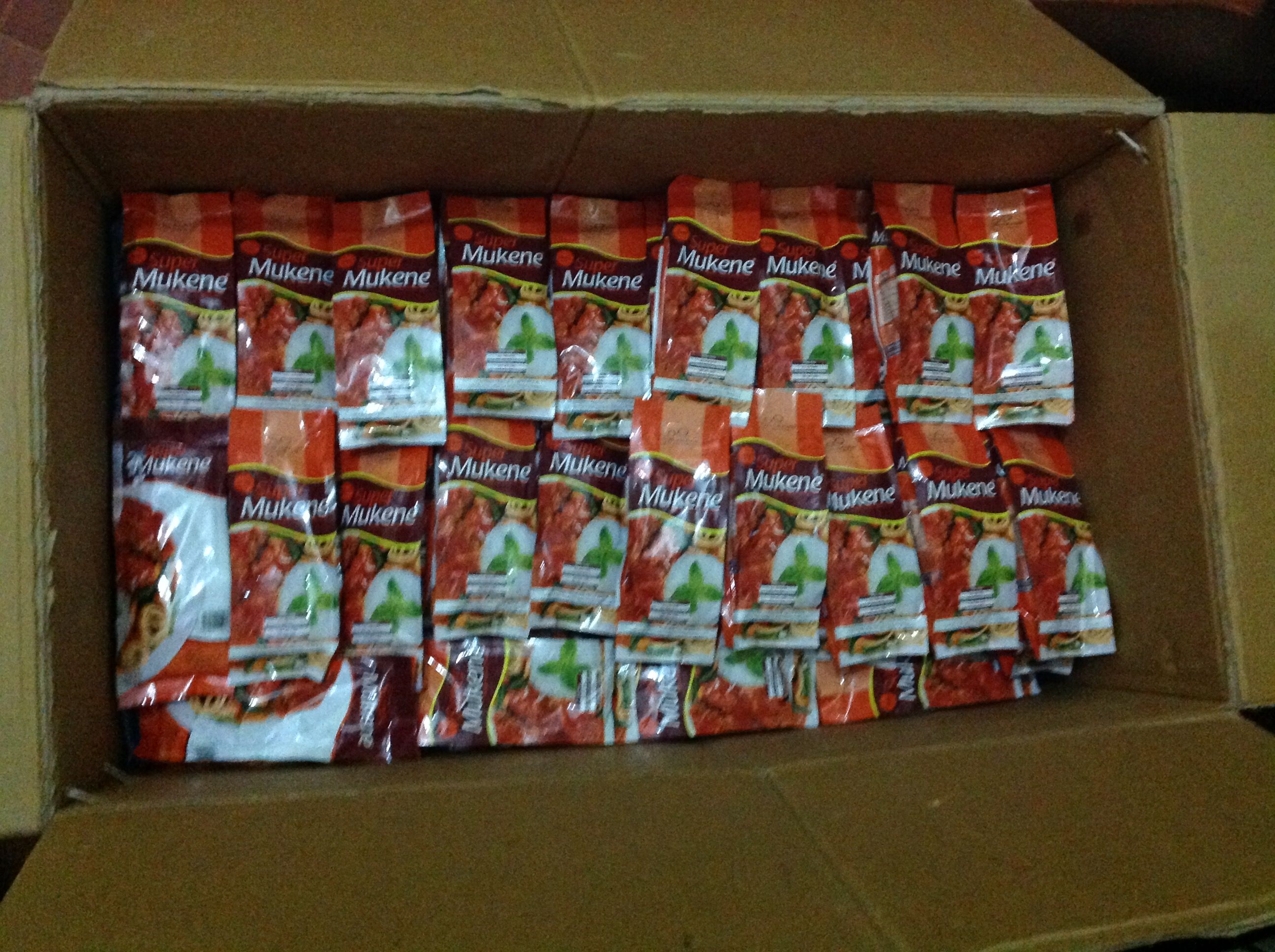
Silver Fish Powder being packed ready for Supermarket supply.

Silver Fish Powder being packed ready for Supermarket supply.

Small businesses that want to concentrate on production as opposed to sales and distribution can also take advantage of the supermarket networks already in place. This augurs well for specialisation that brings with it certain benefits.

Love them, hate them, but Supermarkets are here with us due to their key advantage over the local duuka (shop) of being a centralised shopping centre for the increasingly time constrained working class urban dweller. You had better consider this sales channel.

Twitter: @wirejames

Follow this Blog by submitting your email address in the top left corner of this page.