
Tag Archives: business

Doing Business with Supermarkets in Uganda


Following my expose of Uchumi’s rundown business operations, I was awed by the inquiries that flooded my inbox regarding doing business with Supermarkets. The Baganda say, “Omulya Mamba ab’omu n’avumaganya ekyika” meaning “One bad Apple spoils a bunch

The neanderthal business management approach exhibited by Uchumi Supermarket in East Africa doesn’t necessarily mean that all Supermarkets are evil. It simply serves as a guide on how NOT to run a supermarket business. If what I wrote appalled you, then I wonder how you would react had I revealed the murkier dirt of how managers and low level employees connive(d) to defraud their employer, suppliers and customers.

Are Supermarkets a necessary partner for small business owners? Yes, depending on what you supply, how and the market you want to reach out to.

If you;

  • Have a product that targets individual consumers like processed and unprocessed food, clothing, stationery, hygiene products, cosmetics among others.

  • Have a product that targets the mass market.

  • Want to reach out to the elite market.

  • Want to have a higher inventory turnover with less overheads i.e. you don’t need to have your own employees selling your products all over the place since with a supermarket, their shelves, branding and attendants do that work for you.

  • Have the ability to produce for a market wider than you can directly supply.

  • Have the ambition to grow your brand and achieve greater visibility.

  • Want to rate your performance against the competition.

  • Can afford to offer credit sales.

Then, the Supermarket distribution channel is ideal for you.

Supermarkets have the ability to amplify your market reach beyond your current product marketing resource capacity. All this by merely placing your products on their shelves and ensuring you register presence in their various branches.

Most Supermarkets tend to locate their stores in easy to access locations especially targeting residential suburbs. This is a good omen for anyone targeting the mass market. We have been able to sell our products in towns like Gulu and Mbarara without setting physical foot there.

Supermarkets have the ability to drive up your sales if your products gain customer appeal. In our business we experience a 30% year on year annual growth in sales with one of the leading supermarket chains.

So, here are some of the yardsticks you can use to determine which supermarket to deal with?

  • Ease of Access: Entry requirements into supermarkets varies. For some it’s as simple as appearing with a product and they avail you shelf space while for others, one has to follow an application process. The small, suburb neighbourhood supermarket tends to easily take in products usually on trial basis and once they are found to appeal to customers, larger orders are made. Big Supermarkets (usually chains) have a more complex application procedure that involves a time consuming process of submitting product samples for review after which a decision is made on your application.

  • Payment Terms: Supermarkets have different approaches towards payment.

    • Consignment Basis i.e. Make a supply and once it’s sold out, you are paid.

    • Cash on Delivery i.e. Upon delivery of the product, you sign for your payment.

    • Credit Sales (For lack of a better term). In this case, you supply the supermarket with products and invoices are cleared at specified intervals e.g. every 14/30/45 or 60 days.

  • Market Segment: Different supermarkets have different target markets. The kind of shoppers you will find in Kawempe and Bwaise for example are likely to have different consumption characteristics from those in Naalya and Namugongo. These consumption characteristics affect aspects like package weight (do they prefer to buy smaller or bigger weights?), package quality (are they willing to pay extra for well packaged products or are they content with just the basics?), purchase volumes among others. If you have a good understanding of your products, then it becomes a lot easier to know which Supermarkets to target. Ariel Washing Powder is a good example where the much smaller 45grams packaging is strictly sold in relatively low income neighborhoods as opposed to the larger 500g and 1000g packaging that is prevalent in the upscale supermarkets.

  • Credibility: Many Supermarkets suffer a credibility problem. This is a problem that affects both small and big players alike. Payless Supermarket and Super Supermarket that had over two branches in upscale Kampala suburbs closed without a trace leaving many suppliers in tears. I have seen many small (usually Asian owned) supermarkets change ownership overnight and on pursuing one’s arrears, you’re told that the previous supermarket is no more. This is the modern day thuggery that is being perpetrated by some of these ‘investors’ and small businesses desperate for exposure and market are the biggest victims. I however have found a good number of locally owned suburb based supermarkets to be very credible especially when run by the actual owner.

  • Business Culture: While there do exist guidelines on how businesses are supposed to be professionally run, many entities take on a business culture that rubs off the principles and values of their proprietors. There are supermarkets you will find with very good and efficient systems in place to manage suppliers and customers (they usually aren’t necessarily the big supermarkets). Others have a laissez faire approach towards suppliers mainly with a tendency to treat them as beggars or street urchins whom they are helping to access the market. This latter category tends to present lots of problems when it comes to paying for products supplied.

  • Consult: If you are serious about making this move, talk to people who are already supplying Supermarkets with products. They will freely give you a rundown of which ones are good or not. The information gained is likely to save you from an early business demise.

On the whole, I can confirm that if you are the type with a day time job but trying to make ends meet by selling some products here and there, then using the Supermarkets as an outlet channel is likely to be the most convenient for you.
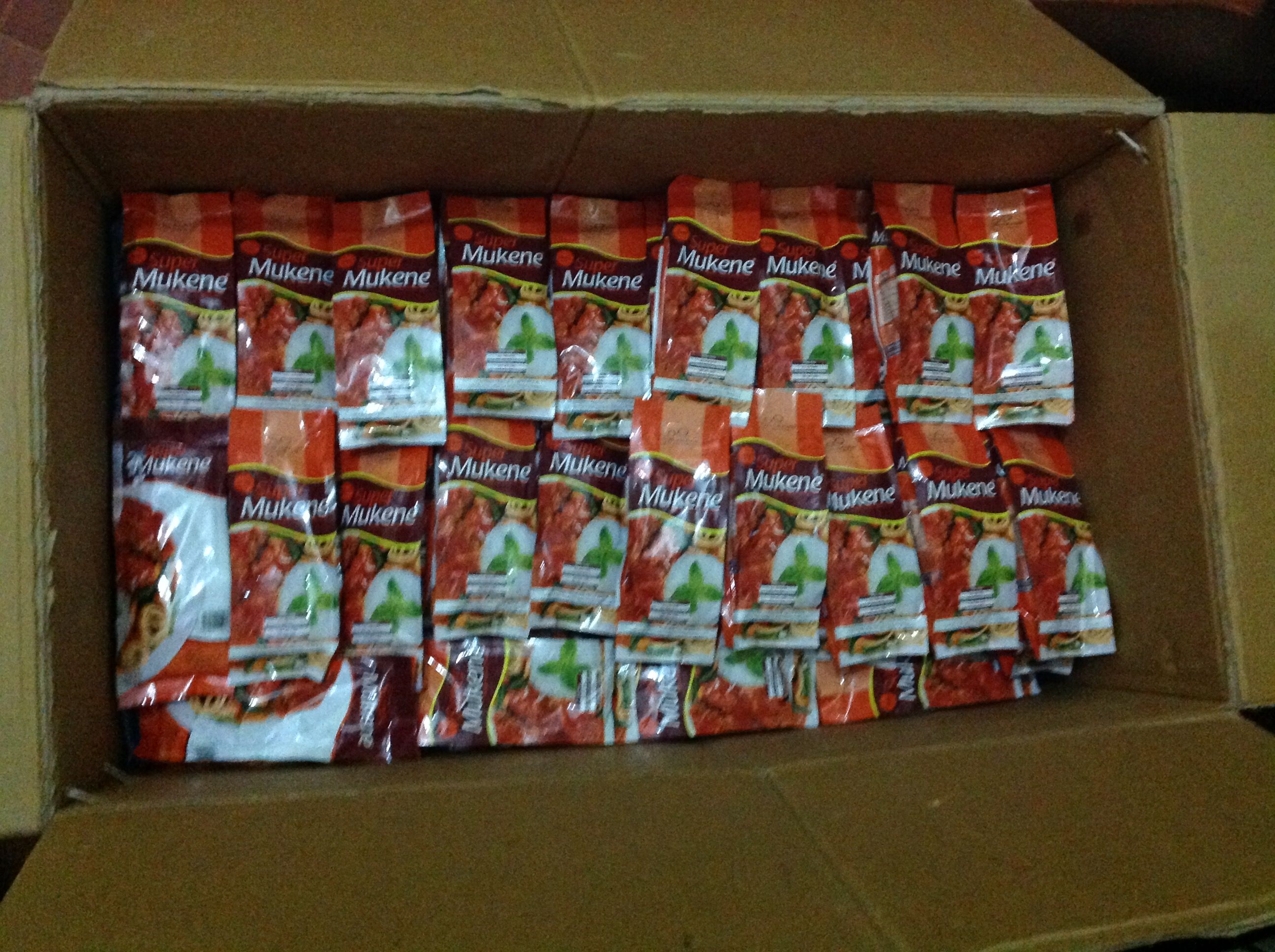
Silver Fish Powder being packed ready for Supermarket supply.

Silver Fish Powder being packed ready for Supermarket supply.

Small businesses that want to concentrate on production as opposed to sales and distribution can also take advantage of the supermarket networks already in place. This augurs well for specialisation that brings with it certain benefits.

Love them, hate them, but Supermarkets are here with us due to their key advantage over the local duuka (shop) of being a centralised shopping centre for the increasingly time constrained working class urban dweller. You had better consider this sales channel.

Twitter: @wirejames

Follow this Blog by submitting your email address in the top left corner of this page.

Fear Failure? Here’s how to overcome it


Jjumba (not real name), has tried his hands at a number of entrepreneurial partnerships with disastrous conclusions, now he is considering going it alone but has some inherent fear which is all summarised in this statement; “What if my capital is not enough or I don’t get clients for a long time?

Nancy (not real name) always excitedly builds business ideas, romanticises about them, gets peer approval and then stops dead in her tracks when it comes to implementation. She confessed to me that she usually gets gripped with the fear about what people will say and the potential financial setback she is likely to experience if the business idea doesn’t work out.

Many times we get so occupied worrying about the future based on our past experiences or knowledge and end up not acting in the present. This disease is of a similar trait to the procrastination that afflicts almost all human beings at various points in their lives.

So, Yes we fear to;

  • Lose money

  • Get into debt

  • Drop out of our circles of friends

  • Appear non-conformist i.e not doing what society expects of us

  • Rock the boat of stability we have built

  • Be seen as having failed

and many other fears that am sure you can add onto this list.

While fear seems to come naturally to us, it’s crucial that we find ways of overcoming it. Fear is probably a major reason the number of entrepreneurs is limited in the world today. These are some of the ways you can overcome fear of failure as an entrepreneur;

What’s wrong with me? Am I good enough? You occasionally get into bouts of self doubt and disbelief in your abilities. This breeds a level of inadequacy that makes you believe that something is not right. Everything is right about you and you only need to realise that many other success stories would never have been if feelings of inadequacy had been allowed to take over.

Bill Gates, the World’s richest man started a business called Traf-O-Data that failed miserably and he even ended up dropping out of Harvard University in the process. He however held onto his passion and vision for computers to later found Microsoft. The rest is history. It doesn’t matter how many times you have failed, you only have to be right once,Mark Cuban.

Avoid personalising failure. Failure should not be viewed as your identity. Take the case of this example from the Forbes Website; “There was a man who failed in business at age 21; was defeated in a legislative race at age 22; failed again in business at 24; overcome the death of his fiancée at 26; had a nervous breakdown at 27; lost a congressional race at 34; lost a senatorial race at age 45; failed to become Vice President at age 47; lost a senatorial race at 49; and was elected as the President of the United States at the age of 52. This man was Abraham Lincoln. He refused to let his failures define him and fought against significant odds to achieve greatness.”

Any entrepreneurial journey you embark upon will always have stumbling blocks along the way, this however doesn’t mean that you are the problem, all it means is that you have not found a successful way of doing that something you are passionate about.

Keep Mistakes alive. In rural Uganda, land ownership demarcation is largely done using plants (usually fast growing trees). Back in my village, we use one called ehiroowa which happens to be the Jatropha plant. Mistakes in business need not necessarily be buried and forgotten as soon as they are made, but should instead be used to act as boundary markers on what not to do along your entrepreneurial journey. By letting them play this role, they will always act as your GPS towards avoiding repeated failure in the same area. “Failures, repeated failures are finger posts on the road to achievement. One fails forward towards success,” to quote C.S Lewis.

Watch out for Perfectionism. Psychologists refer to Perfectionism as, “a personality trait characterized by a person’s striving for flawlessness and setting excessively high performance standards, accompanied by overly critical self-evaluations and concerns regarding others’ evaluations”. While it has its positives, the downsides tend to be manifested as fear of failure and depression which are closely linked to people who personalise failure.

One thing we all have to accept is that life can never follow the script that we design for it, there are always twists and turns along the way towards your goals. The same is true in business and it’s the reason we shouldn’t throw pity parties when hit by failure in business. When something fails to work out, move on to the next modification and quickly find out if that too can or can’t work.

At its root, perfectionism isn’t really about a deep love of being meticulous. It’s about fear. Fear of making a mistake. Fear of disappointing others. Fear of failure. Fear of success.” – Michael Law

Desist from Comparisons. The public and sometimes your very family are usually quick to make judgement when you fail. This concern tends to fill your mind with questions like; “What will my parents think about me?; Will my friends still want me around them?; Can I afford to maintain my lifestyle amidst the failure?” Concern for public opinion definitely can keep you in static mode and you need to disengage from it. Considering Abraham Lincoln’s numerous setbacks, he without doubt must have been a trending topic in the gossip corridors on a number of occasions but that didn’t deter his determination.

Worst Case Scenario. If the business doesn’t work out, what will happen to me?” This is a big concern for many going into business and unfortunately it’s further exacerbated by the images painted in our minds of what is likely to happen. Oftentimes our mental thought on this issue tends to veer to the extreme.

The best way to avoid being enslaved by this ‘Worst Case Scenario’ disease is to take time and assess it in detail, you might be surprised to find out that it might not be as bad as it looks.

Reach Out. When faced with failure, it always helps to reach out to people you either feel are already experienced in what you are attempting to do or even those that you could consider mentors. No man is an Island, so avoid bottling up all those questions and challenges. Alexis Carrel once said, “All of us, at certain moments of our lives need to take advice and to receive help from other people.”

I have found sharing a problem or fear with the right audience to be so beneficial and in most cases solution generating.

Rosa Parks, the famous American activist once said, “I have learned over the years that when one’s mind is made up, this diminishes fear; knowing what must be done does away with fear.”

Is your mind made up?

Additional information got from: