
Tag Archives: business

DFCU marches on


Resilience is defined as the ability of people, organisations, systems to mitigate, adapt to as well as recover from shocks and stresses. If there is a bank in Uganda that has shown its resilience in the recent past, then it is DFCU Bank.

Following the takeover of another local bank, the storms that the institution has had to wade through have not been easy. This was very evident in the media presentation of the bank’s performance over the year of 2018.

Some quick facts about the bank:
• With 65 branches across the country, it is the 2nd largest branch network.
• Over 420 ATMs access
• Over 600 Agent Bankers across the country
• Customer base of over 1 Million depositors
• Mobile banking App

Operating in a seemingly stagnant economy, the bank was able to show flashes of marginal improvement in a number of areas and this should be a cause for some celebration. It is a pity that always the profit registered is what most consider when rating the health status of a business. This should always be done in context though.

The role DFCU bank plays in promoting Small and Medium Enterprises is quite impressive. Through the creation of opportunities for the SMEs in the form of training as well as investment support, the bank has impacted on a section of the business community that is crucial to the local economy.

All through the presentations, I strongly noted the following as the key take home issues from the bank’s performance;
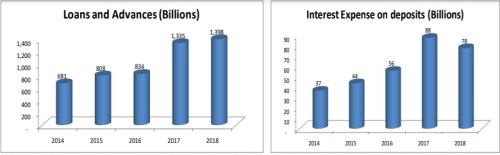
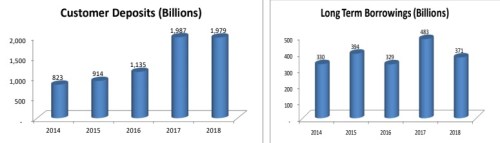
• There was a significant drop in reliance on third party borrowings
• The lower interest cost is a great sign of improved operational efficiency
• There was a remarkable growth in the income from other sources other than interest income.
• Improvement in the portfolio quality resulting in a lower impairment charge.
dfcu

dfcu1

Harbouring ambitions of being a market leader and technology driven financial institution, the journey has only just begun.

With a new MD in place, Mr. Mathias Katamba, I can only look at the future with more hope considering that DFCU bank is an indigenous bank that is rolling with the big global names in the market place.

James Wire is a Business and Technology consultant based in Kampala, Uganda

Twitter – @wirejames


UNBS, consider restoring the S-Mark


The Uganda National Bureau of Standards (UNBS) is a statutory body set up by the Government of Uganda to among others formulate and promote the use of standards as well as enforce standards in the protection of public health and safety.

As part of its duties, the UNBS operates a Product Quality Certification Scheme targeting the manufacturing sector. When a product is certified, the manufacturer is given permission to affix the UNBS quality mark either on the product itself or on the packaging. The purpose is to give the customer confidence that what they are purchasing is suitable for use.

In years gone by, this certification had two versions, the Q Mark and the S Mark. The S Mark was an entry level certification that could be attained by a manufacturer for product recognition within Uganda. The Q Mark was a higher end version of the S Mark that enabled one to freely export their product to the regional markets without hindrances of any form.

For budding SMEs involved in production especially food processing, the S Mark was a breather considering that it was easier to conform with based on their limited resources and expertise as they marshalled their way towards eventually getting the Q Mark.

Then one day, UNBS woke up and made a ground breaking announcement that it was removing the S Mark and leaving only the Q Mark. The key reason being advanced was that local companies needed to be able to export their products to the regional market. Flimsy and non convincing reason in my view.

First of all an assumption was made that every producer wants to export to the region. Secondly, the resources required to achieve the Q Mark certification are way out of the league of most SMEs. A simple food processing outfit could need not less than UGX 10 Million to simply put in place the necessary infrastructure and processes that enable it to qualify for that standard. How many SMEs can afford that investment?

UNBS further followed up this decision by mandating that all products in the local Supermarkets should have the Q Mark certification. This further makes me wonder what they were thinking as they hatched this seemingly ingenious plan. There are numerous supermarket suppliers who will never afford the Q Mark certification requirements and blocking them from the supermarket shelves shall not only ruin livelihoods but also go against the spirit of Buy Uganda Build Uganda.

Other than forcing even locally focused producers to take on the Q Mark, UNBS should spend time focusing on how to facilitate these SMEs to transition into certification affordably. The best way around this is to have a basic quality mark in place (like the S Mark) which can guarantee the basic product quality expectations thereby enabling the small producers to also get covered.

By restricting all producers to one Q Mark standard, UNBS gives very little room for flexibility and as they enforce the use of the standard, numerous small businesses are likely to drop off the radar with grave consequences to the overall economy. Remember that SMEs form over 80% of the private sector business.

To UNBS, restore the S Mark or introduce an intermediary mark that can easily be acquired by small businesses that are not yet even interested in the export market. You can’t have a one size fits all arrangement here. Should you continue to insist, the results shall speak for themselves with a drop in producers, something which doesn’t augur well for an institution that is meant to play a facilitatory role to the nascent SME private sector.

James Wire is a Business and Technology Consultant based in Kampala, Ugandans

Follow him @wirejames on Twitter

Email lunghabo [at] gmail [dot] com