Tag Archives: business

UNBS, consider restoring the S-Mark


The Uganda National Bureau of Standards (UNBS) is a statutory body set up by the Government of Uganda to among others formulate and promote the use of standards as well as enforce standards in the protection of public health and safety.

As part of its duties, the UNBS operates a Product Quality Certification Scheme targeting the manufacturing sector. When a product is certified, the manufacturer is given permission to affix the UNBS quality mark either on the product itself or on the packaging. The purpose is to give the customer confidence that what they are purchasing is suitable for use.

In years gone by, this certification had two versions, the Q Mark and the S Mark. The S Mark was an entry level certification that could be attained by a manufacturer for product recognition within Uganda. The Q Mark was a higher end version of the S Mark that enabled one to freely export their product to the regional markets without hindrances of any form.

For budding SMEs involved in production especially food processing, the S Mark was a breather considering that it was easier to conform with based on their limited resources and expertise as they marshalled their way towards eventually getting the Q Mark.

Then one day, UNBS woke up and made a ground breaking announcement that it was removing the S Mark and leaving only the Q Mark. The key reason being advanced was that local companies needed to be able to export their products to the regional market. Flimsy and non convincing reason in my view.

First of all an assumption was made that every producer wants to export to the region. Secondly, the resources required to achieve the Q Mark certification are way out of the league of most SMEs. A simple food processing outfit could need not less than UGX 10 Million to simply put in place the necessary infrastructure and processes that enable it to qualify for that standard. How many SMEs can afford that investment?

UNBS further followed up this decision by mandating that all products in the local Supermarkets should have the Q Mark certification. This further makes me wonder what they were thinking as they hatched this seemingly ingenious plan. There are numerous supermarket suppliers who will never afford the Q Mark certification requirements and blocking them from the supermarket shelves shall not only ruin livelihoods but also go against the spirit of Buy Uganda Build Uganda.

Other than forcing even locally focused producers to take on the Q Mark, UNBS should spend time focusing on how to facilitate these SMEs to transition into certification affordably. The best way around this is to have a basic quality mark in place (like the S Mark) which can guarantee the basic product quality expectations thereby enabling the small producers to also get covered.

By restricting all producers to one Q Mark standard, UNBS gives very little room for flexibility and as they enforce the use of the standard, numerous small businesses are likely to drop off the radar with grave consequences to the overall economy. Remember that SMEs form over 80% of the private sector business.

To UNBS, restore the S Mark or introduce an intermediary mark that can easily be acquired by small businesses that are not yet even interested in the export market. You can’t have a one size fits all arrangement here. Should you continue to insist, the results shall speak for themselves with a drop in producers, something which doesn’t augur well for an institution that is meant to play a facilitatory role to the nascent SME private sector.

James Wire is a Business and Technology Consultant based in Kampala, Ugandans

Follow him @wirejames on Twitter

Email lunghabo [at] gmail [dot] com
Grains Processing greatly improving in Uganda


Uganda is known for its competitive edge in agriculture. With 70% of the population being engaged in the agriculture industry, one cannot hide away from the fact that there is a lot of money to be made in this regard.

While growing up, I always frequented mills in order to process the maize and sometimes millet that my parents grew. The typical Ugandan mill is a rickety housed old and cranky machine that blows out dust at will leaving anyone in the vicinity with a ghostly look.

I was however taken by surprise recently when I visited Arise and Shine Maize Millers. Tucked away in the Kampala suburb of Kawempe is an ultra modern computerised mill of its own kind. Having specialised in Maize milling, the proprietors have taken time to grow their niche from the very rudimentary processing facilities that are typical of the Ugandan Food Processing industry. 

old_mill

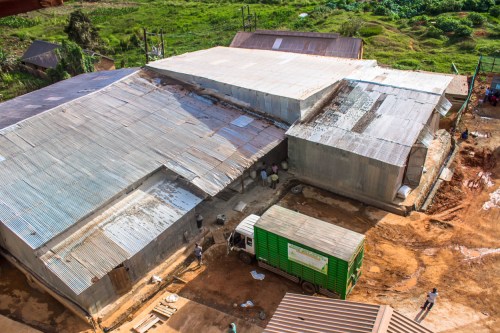
The iron sheet structure old mill (Photo credit – Nabwiso Films)

Having operated for a number of years in a rudimentary fashion, it dawned upon them that there was a need to upgrade their operations to suit the changing times. They had some challenges that needed addressing as well as opportunities to take advantage of like the export market.

The primary challenges were, cleaning, drying, storage and safe food handling. Mr. Matia Mubangizi the Investment and Business Development Manager at the facility noted that, “the biggest challenge in the grains business is storage. Moisture content and impurities cause a lot of loss for the grain dealers and they have to be dealt with.”

Armed with this in mind, the company took on the services of a consultant to help address the challenges. This consultant came on board courtesy of support from the Competitive and Enterprise Development Project (CEDP), a project under the Matching Grant Facility, funded by the Government of Uganda and the World Bank.

As a result of the consulting support, the company acquired new machinery with intent to modernise all its operations. They then applied for a Matching Grant Facility entitling them to a 50% reimbursement of expenses towards equipment installation.

This machinery upgrade helped improve the handling of grains thereby reducing aflatoxin presence which is a key impediment for the export market. The deployed equipment involved among others;

  • A weigh bridge

  • A 20 – 25 tonnes per hour drier

  • A cleaner with an hourly capacity of 25 Metric Tonnes

  • A 300 Metric Tonnes storage facility

  • Packaging lines

weigh_bridge

The new weigh bridge (Photo credit – Nabwiso Films)

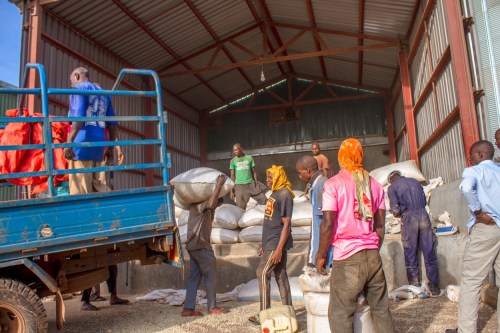
During my visit to the mill, I witnessed first hand the delivery of maize and how dirty it can be upon arrival. The problem seems to start with the farmers who do so little in terms of proper post harvest handling. As the bags were being emptied, one could see maize cobs, leaves, stones and all sorts of chaff mixed up in the maize. This implies that if the maize miller buys the declared kilos without cleaning, a loss awaits them. It’s on record that Kenya has rejected maize from Uganda on quality grounds.

maize_delivery

Maize Delivery in Progress (Photo credit – Nabwiso Films)

With the new machinery, the maize is taken through an automated cleaner that removes all foreign matter. Once the moisture content of the maize is found to be insufficient, it’s then redirected into a dryer that dries it to the recommended level. This has tremendously increased the product quality of the mill.

part_of_mill

Storage Facilities for the newly installed mill (Photo credit – Nabwiso Films)

A comparison of the production matrix before and after the installation of the new mill reveals drastic progress.

Before

After

  • Used to handle 5 – 6 trucks of maize daily
  • Currently handle upto 30 trucks of maize daily
  • Used to receive 50 – 70 tons of maize daily
  • Currently receive 200 tons of maize daily
  • Supplied local market entirely
  • Currently supplying both local and foreign market

The process improvements as well as new markets have had a positive impact on the production and profitability of the mill. Aspects like automated weighing drastically reduced the turn around time of attending to each delivery truck. The export market was catalysed by the ability to produce premium products that meet international food safety standards.

On the Human Resource front, 30 graduates were invited to participate in the training during the installation of the machinery, upon completion, 11 of them were hired.

Without doubt, the story of Rise and Shine Maize Millers is worth sharing and confirms the potential Uganda has as a country in the value addition of agricultural produce.

James Wire is a Business and Technology Consultant based in Kampala, Uganda
Follow @wirejames on Twitter.
Email lunghabo [at] gmail [dot] com