Tag Archives: sme

Good African Coffee Closure. Is Uganda’s economy on Auto Pilot?


Andrew Rugasira is no saint, however one thing I can authoritatively say about him is that he is a resilient entrepreneur who always turns ashes into beauty. Many years back, I recall him running a prominent promotions company called VR Promotions which bit the dust. He was humble enough to go into hibernation only to re-emerge a couple of years later with Good African Coffee.

When I bought the newspapers of the 25th of April 2017, I was taken back upon reading a story about how the tax man had closed down his business for tax arrears of UGX 1.2 Billion.

On the 23rd of April 2017, Ian Ortega posted a mind opening article on Facebook in which among others he stated, “… We pride in building mansions in our villages in a sea of mud and wattle houses. And in the end we pay for it with insecurity, with deaths. It makes no sense to have majority poor and few rich. It always backfires… Start doing something to make sure the economy works for everyone regardless of their field. Let it work for a musician, for an artist, for an engineer, for the teacher etc. That is how you build sustainable societies.

Having interacted one on one with Mr Rugasira a year back, I got to know quite abit about his ethos. While he is a hard nosed businessman, his passion for equitable growth and development is worth admiring.

Businesses close for various reasons and their closure has varying impacts on the economy. There are businesses whose closure will largely cause ripples among a few selected elites (who tend to be the noise makers) while others have the Fall Army Worm effect of distorting the bottom of the pyramid poor.

According to the New Vision, Good African Coffee has a network of more than 14,000 coffee farmers and has facilitated the set up of 17 (Seventeen savings and credit organisations) for these farming communities. The average household in Uganda has 5 members. This implies that if each coffee farmer is equivalent to one household, then the direct impact of his investment at this micro level has a reach of at least 70,000 people. Considering that in Uganda, it’s part of our culture for a household head to help various extended family members especially economically, we can safely assume that each farmer has an impact on 10 (ten) people in the extended family bracket. This implies that upto 140,000 people indirectly benefit from Good African as a result. On average we can safely state that at least 200,000 people from the coffee growing region are beneficiaries.

The New Vision further stated that the Good African products are available in over 700 UK Supermarkets as well as 500 stores in Africa. As a supermarket patron, I have come to learn that products on those shelves serve not only the purpose of consumer consumption but also national branding. How many people today in the UK swear by Good African Coffee? Judging by the inquisitive nature of today’s shopper, chances are high many have got to learn more about Uganda in the process. What better marketing for our nation?

While I am inclined to believe that management issues have definitely contributed to the status-quo, it’s quite sad that the tax man would be left to execute such a closure without proper appreciation of its wider implications. The Uganda Revenue Authority is not to blame since it is merely an execution agency tasked with collecting revenue for the Government. However, with all the tax breaks we keep hearing being directed to questionable foreign investors, why would a legitimately Ugandan owned and home grown business fail to be extended help? We just heard about the planned UGX 77 Billion tax relief that a number of companies whose list is led by the Sudanese owned AYA Group of Companies are likely to get. In my view, the footprint Good African Coffee has is much wider than AYA and any of those companies on the bail out list yet above all it impacts the lowly farmer whose sole hope for survival is farming.

We always hear of decisions being made in National Interest and this is what Hon. David Bahati, the State Minister of Finance for Planning emphasised while meeting Parliamentarians over the AYA bail out. Why was Good African overlooked?

  • Is it because the latter promotes the well being of peasants and there is this general fear among the political elite of genuinely empowering them?

  • Could it be that Rugasira doesn’t have the right brokers to argue out his case before the high and mighty in the Ministry of Finance?

We have been led to believe that overnight business moguls who set up with Shopping malls out of the blue are the ones that deserve respect and propping in order to keep our economy afloat but if we do not babysit the Rugasiras of Uganda and ensure that their businesses succeed at all costs, we shall continue in the cyclic rat race characterised by chronic poverty. Government should sit down Andrew Rugasira, make it clear to him that the success of his business is a national priority and could even have security implications considering that a large section of the farmers are from the already troubled Rwenzori region who might perceive matters differently. The riot act should be read out to him before working out bail out terms and conditions.

PS: In case you are comfortably employed with a regular salary and high flying MBA, you might have a problem appreciating the challenges genuine entrepreneurs go through in this Ugandan economy of ours. One day though, I hope you will be around long enough to appreciate what goes on the other side of the bridge.

I say, Bail Out the Brother !!!!!!

[UPDATE: Two days after publishing this aricle, Good African Coffee was reopened. I thank the authorities for having exercised a sense of sobriety. Now the ball is in Rugasira’s court to ensure he complies as required. ]

James Wire is a Small Business and Technology Consultant based in Kampala, Uganda

Follow @wirejames on Twitter.

Email lunghabo [at] gmail [dot] com

See a great reading resource on Coffee here

Other Articles of Interest:

HOW TO – Start a Chapati Business


Rolex, one of the CNN recognised world famous foods is basically a Ugandan Chapati wrapped around a fried egg. Chapati is one of the most sought after snack like foods by all categories of consumers.

chapati

Chapati as it is known in Uganda

Making and selling Chapatis is one of the businesses that many find easy to set up due to the low start-up investment costs as well as high demand for the product(s). It is however important to note that while you can run it as a standalone business, it is always wise to have two or three other complementary products alongside it in order to reap maximum benefits. Some of these products are Samosas (sumbusa) and Mandazi that have similar requirements for inputs. What is shared here can be similarly applied to other products like doughnuts.

What infrastructure do you need to effectively run a Chapati business?

  • Operating Table. Notice the concealed compartment. It is a pre-requisite when selling food products by the roadside in Kampala.

    OperatingTable

    Operating Table for a Chapati business

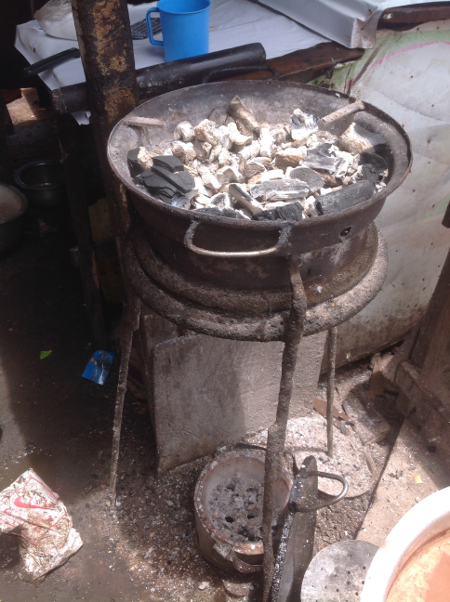
  • Charcoal Stove

    CharcoalStove

  • Saucepans (At least two big ones)

Saucepan

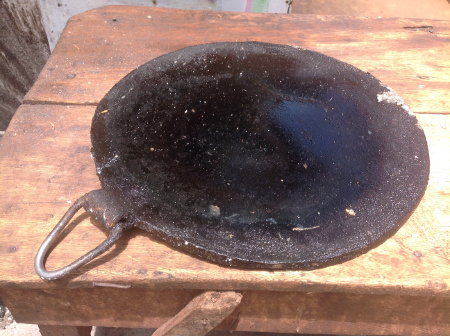
  • Frying pan (For preparing the chapati)

FryingPan

  • Bench (for customers to sit on while eating)

  • Plastic plates (for customers to use when eating)

  • Jerrycans (keeping a water reservoir for customers to clean their hands or even wash your utensils)

  • Basin (for mixing dough)

Key considerations when setting up the business

This is a basic, easy to set up business. However, one need consider the following issues:

  1. Business Plan: A basic plan can suffice. It ought to answer a few questions like target market, desired sales targets, long term outlook, product mix (are you dealing in chapati alone or a mixture of products), planned operation approach among others. If you feel encumbered writing it down, at least have some of these issues answered mentally.

  2. Recipe: For those that know all about Chapati, you definitely can tell the difference between a good and bad one. This usually boils down to recipe and of course workmanship. Considering that there are many chapati sellers especially in the key trading or residential areas, having an attractive recipe will guarantee you return clients.

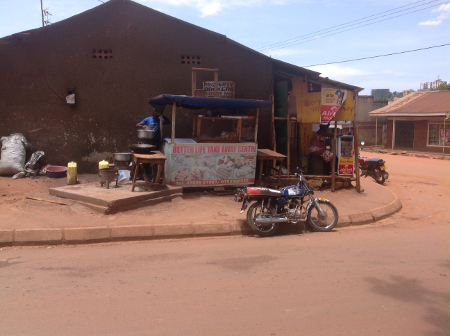
  3. Location: In this business, location is paramount. It is essentially a roadside business whose ultimate goal is to prey on the gullibility of people going about their usual routines. You need to make it as convenient as possible for someone to part with that loose change in order to satisfy their hunger pangs. Common locations for chapati stalls are trading places with shops, restaurants and supermarkets; residential neighbourhoods; public transport stages as well as environs of bars.

    location

    Notice the strategic roadside corner location of this chapati business

  4. Raw Materials: Other than the earlier mentioned equipment, recurrent costs go to cooking oil, Wheat flour, baking powder and any other ingredients of your choice. Most of these are readily available in supermarkets and shops. Just make sure you purchase quality and unadulterated products.

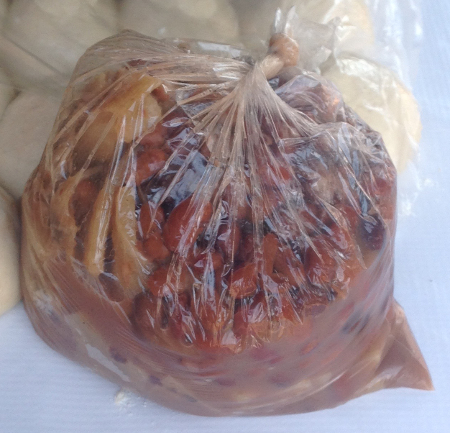
  5. Products: Chapati can be packaged in different ways to form different products. You can offer a plain chapati, Rolex or even a Kikomando (Chapati mixture with beans)

    kikomando

    Kikomando, one of the best selling products

  6. Human Resources: If you do not plan to directly run the business, then you need to hire decent people or a person that will ensure you offer a very tasty product as well as manage customers well. Do not underestimate the kind of person you choose to play this role. They are the face of your business. Structure out a motivating payment structure. As opposed to a fixed salary, a sales oriented approach towards payment is likely to be more enticing.

hr

Some of the factors that attract customers to your chapati stall are;

  • A nice recipe

  • Good public relations / sales language. The way your staff talk to the customers especially ladies who happen to be the biggest customers is key.

  • Smartness. Ensure that you or your staff manning the stall is smart at all times.

  • Endeavour to keep the operating area as clean and free of insects like flies.

How can one invest in the Chapati business

One can venture into this business in different ways. Some of those that I have been able to identify are:

  1. Renting Space. You might be having a shop or premises that are in a strategic location by the roadside. You can simply rent out space to anyone who is interested in setting up a chapati stall and they are in position to pay something commensurate monthly.

  2. Hiring a Location and erecting key infrastructure. As seen earlier, the operating table can take on different designs as well as abilities. Some people have specialised in identifying customer friendly locations, erecting a shelter as well as the required operating table then renting out the facilities to actual chapati sellers for a daily rate. One of those locations I know of earns the landlord UGX 50,000/= daily!!!!!

  3. Acquire all the requisite infrastructure and set up a chapati stall. This would imply running the business in its entirety. It might involve you manning the stall directly or hiring an individual that you pay.

What is the sales outlook like?

The location in which I did the research from was in a Kampala suburb called Kyebando. It is not as busy as many of the suburbs I know. However, the sales figures were quite interesting.

One packet of Wheat Flour weighs 2 Kilogammes and on average produces 20 chapatis. The highest selling stall in that area consumes not less than 24 packets daily. The arrangement used is option two where the actual chapati seller hires infrastructure from someone else. He pays a daily rate of UGX 50,000/=. Considering that each plain chapati costs UGX 500/=, this guy should be earning gross revenues of at least UGX 240,000/=. This is exclusive of extra income that comes from Rolex and Kikomando sales.

Something definitely looks quite appealing. Don’t you think so? If I were to go into this business, I would focus on eventually setting up a chain of outlets using investment model II above.

Welcome to the Chapati business. I wish you the best in your endeavours.

James Wire is a Small Business and Technology Consultant based in Kampala, Uganda

Follow @wirejames on Twitter.

Email lunghabo [at] gmail [dot] com

Other Articles of Interest: