
Tag Archives: start-up

HOW TO – Start a Supermarket


A Supermarket is a large self-service shop selling foods and household goods, according to the English Oxford Living Dictionary. In Uganda, you might want to avoid sticking to that definition by erasing the term large.

We have supermarkets that cover over 5000 Sq. Metres while those in most residential neighborhoods are as small as 20 Sq. Metres. It’s important that we have a similar appreciation of what a supermarket means in the Ugandan context before going ahead with this article.

One of the businesses Ugandans have given attention in the last ten years is the Supermarket business. As a supplier of products to supermarkets, I have an eye for locating the new ones considering that the wider I cast my net, the more sales I make.
img_9623

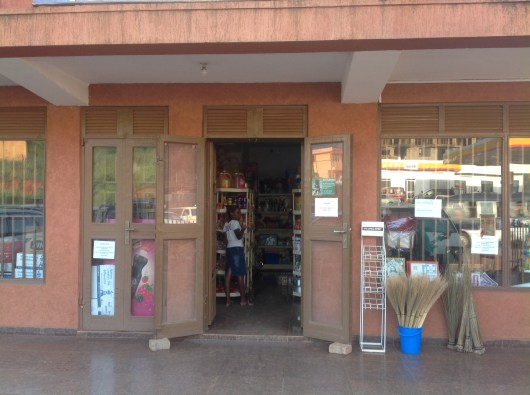
A typical neighborhood supermarket in Kampala, Uganda

From my observation, this is one of the easiest businesses to set up and yet potentially challenging to run. You could choose to directly manage its operations or hire a team to do so. The former option is likely to reduce on the operational headaches by far.

What do you have to consider when setting one up?

  1. Location: The biggest success factor for this business is location. Where you put your supermarket will clearly determine not only the category of clients you attract but also their numbers and frequency of shopping. A supermarket located by the roadside with little or no parking slots for cars had better be near a busy public transport stage. You could also locate it in an affluent suburb or on the road leading to such a suburb from a busy work area of the town. However, in this case, having good parking is a big advantage considering the likely transport mode for most of the middle class families. One of the best locations also is residential areas. Setting up one within an estate or its environs offers a much bigger market guarantee especially if the estate is big in size.

  2. Ground Floor: Wherever the location you settle for, always insist on having the supermarket on the ground floor. Anything short of that will lead you to failure right from the word go. Most Ugandans are not into the habit of climbing stairs just to get stuff done. It is the reason you find most of the storeyed buildings in the city having tenants occupying only the first three floors with the rest being empty. Suppliers also have an easy time when delivering products since having to lift them to higher levels might involve much more labour and time.

  3. Parking: Availability of parking for cars is crucial if you want to reach out to an affluent or mixed client base. Depending on your location, you might want to insist on having parking space near or at the front of the supermarket.

  4. Branding: This can be a complex matter but in the most basic way, simply ensure that you come up with an appealing name and graphics for the business. This process needs to put into consideration your likely target customers and long term plan for the business.

  5. Fittings: Get your internal fittings right. The shelves, cold storage facilities, tables, security among others. The extent of these fittings is determined by the spread of services and products you intend to provide. A basic no frills supermarket intent on merely retailing basic household goods would focus on shelves, a cashier’s table and one or two fridges.

  6. Supply Chain: Supermarkets need suppliers in order to serve their customers. Supplier X brings her baked Cakes, the supermarket displays them on the shelves and customers buy. After sale, the supermarket notifies the supplier to restock as well as receive payment for the previous consignment. The beauty with this is that as you set up the supermarket, suppliers start flocking the venue asking to be registered. So, it is among the easiest to handle.

  7. Human Resource: You need people to run the supermarket. Even when you choose to manage it directly, depending on your scale of operation, there is always that need for a few extra hands to help in:

    • Attending to customers

    • Receiving products from suppliers

    • Security

    • Cleaning the supermarket

    • Managing books of accounts, e.t.c.

  1. License: Get a trading license from the local authorities. This trading license is paid for annually and has to be factored in as one of the recurrent costs.

  2. Business Registration: With things getting tighter in Uganda today, you can hardly open up such a business without having some form of registration. Identify whether you want to register a Private Limited Company, Sole Proprietorship, Partnership or any other mode. This is a pre-requisite in order to get a Tax Identification Number from the Uganda Revenue Authority.

  3. Business Plan: Try to have some form of written business plan. I know, when I talk about this, you’re probably imagining a one hundred page document filled with all sorts of academic brouhaha!!! No. A business plan can be as simple as a three page document listing the key issues and how you plan to deal with or achieve them. In the case of a supermarket, one of the issues you need to address is the products and their pricing.

    • What mark-up do you place on your products and how does the eventual price affect the ability of your target market to purchase?

    • What type of products do you stock? You have no need stocking electronics like Televisions in a supermarket located in a housing estate. That shelf space is better used stocking washing detergents.

    • What product sizes or packaging do you opt for? Detergents like Ariel or Omo are on high demand and purchased by most households. However, the purchase quantities vary from one market segment to another. The affluent moneyed class prefers to buy the One Kilogram or even Five Kilogram packs while the low income households prefer to buy the smaller 100 gram packs. Study your market and stock the right product sizes.

  1. Return Policy: Set a clear policy on product returns. Often times supplied products get expired, damaged or might be defective right from the factory. As a supermarket, you do not have to bear that as a loss, it should be clear to the suppliers that they replace any products that cannot be sold to customers for one reason or another.

  2. Supplier Payments: Most suppliers offer credit to supermarkets save for a very few like Milk and bread suppliers who tend to collect their money upon delivery. However, for those that extend credit, it’s crucial that you have a very organised system of managing them. Some supermarkets settle outstanding invoices every two weeks, thirty days or even forty five days. Others clear each pending invoice upon product depletion on the shelf. Setting up a predictable payment system for the suppliers not only endears you to them but also ensures that you manage your cashflow better. This particular point is the reason Uchumi Supermarket closed operations in Uganda and Nakumatt Supermarket too is currently struggling to remain in business.

  3. Point of Sale System: This is an electronic system used to record transactions at the point of payment in a shop or supermarket. It could be crucial or not depending on your scale of operation. If it’s a small Mom & Pop neighbourhood supermarket that you directly manage, you may start without it. However, for a business you aren’t actively managing, this system will help you so much as it allows you to make daily audits of sales by recording all transactions.

  4. Theft: For as long as you get into this business, expect this to be a sticking issue. Globally, supermarkets put a 3% mark-up on their product pricing to cater for just this. While you can employ technology and other means to reduce its prevalence, theft will always occur. How does it happen?

    • Walk-in customers. There is always an army of people who have made it their livelihood to steal products from supermarket shelves and find their way out without paying. This is one of the reasons you need an extra hand to run the supermarket. They can keep watch over such activities. However, what happens if they collude?

    • Crooked Suppliers. There are cases of suppliers who deliver less than what has been indicated on the invoice. It implies that you pay them for goods that were never supplied in the first case. Matters are made worse when they collude with your staff to make these false declarations.

    • Staff. Internal supermarket staff could also be a source of illicit product loss. They tend to take advantage of the trust bestowed upon them to engage in theft. In bigger supermarkets, they are known to form networks that ensure the untraceability of their illegal activities. The closed Uchumi Supermarket was a glaring example that suffered from internal staff theft.

  1. Money: Finally, have money. While I cannot give you financial estimates, by perusing through the list of issues presented so far, you can get a good idea of what to prioritise and hence determine how much you need to set up the business. The best thing about it all is the fact that product stocking which tends to cost a lot is largely on credit hence reducing the overall initial financial burden.

I hope you are now ready to start that supermarket business. Do not waste any more time. Get at it right away.

James Wire is a Small Business and Technology Consultant based in Kampala, Uganda

Follow @wirejames on Twitter

Other Articles of Interest:

I’ve been Retired. How do I invest my money?


“Dear James, I have been working with a known brand name in Uganda for many years. Recently, I was retired under mutual consent and given a severance package. However, I do not know exactly what to do in order to ensure that my money does not fade away. I still have a young family and need to continue earning somehow. Please help!!”

The tone of the email vividly showed me that Gusaga (name not real) was crying out for help. As opposed to most cries I get of people who lack money, this time round, he has the money but is scared about losing it all.

You too are probably having a time of your life in that job guaranteeing you certain basics as well as promising you much more in future. However, one fate that awaits you for sure is retirement. One day, as sure as night follows day, you will be sent packing. What do you do when that time comes?

Gusaga is an accomplished professional who has put in a great effort in his career and is now at crossroads. Faced with the scenario of a lifestyle change from the 8am to 5pm job routine, the frequent meetings and travel, the corporate hobnobbing that has seen him mingle with the crème de la crème, the feeling of power and importance managing a team, company supported holidays to exotic destinations for his entire family, guaranteed education for his children in elite international schools among others, he begins to wonder what lies ahead. However, in this article, we shall stick to his concern, the money. How can he keep it and ensure that it multiplies?

First and foremost, for the money to multiply, Gusaga needs to seriously consider becoming an investor of sorts. It is only by sowing that money in various opportunities that he will realise the growth he yearns for.

He needs to establish his personality for starters. Is he a risk taker or risk averse? Investment ventures are driven by that foundation in individuals. In most instances, carefully thought out but risky ventures tend to pay significantly more than their non risky alternatives. Money lending is one of those slippery businesses where you swing to either extremes, from a good kill to a total loss. With a personality portfolio in place, he can then start considering opportunities accordingly.

In Uganda, some of the safe investment opportunities are;

Fixed Deposit: This is a financial instrument provided by banks which gives investors a higher rate of interest than a regular savings account, until the given maturity date. You might have UGX 10,000,000/= (Ten Million) and choose to fix it in a bank for a year at an interest rate of 10%. This will guarantee you UGX 11,000,000/= (Eleven Million) by the end of the transaction period. You get to make a profit above the average rate offered for savings accounts. This kind of opportunity is good if you are in a situation where you do not have a clear plan of action for the money you’ve acquired. The time it spends away from you should allow for a more sober assessment of opportunities.

Company Stock: Uganda has a vibrant stock exchange called the Uganda Securities Exchange (USE). It is basically a market area where investors can buy and sell shares of companies. You might be a great admirer of a leading business brand that happens to have listed on the Stock Exchange. Your dream of part ownership can easily be realised through this market. Two benefits for holding company stock are; first, as a part owner of the company whose shares you bought, you are entitled to a share of the profits which come in the form of dividends. Secondly, your share value is also likely to increase in financial value over time. A share you probably bought for UGX 500/= might go for UGX 750/= within a year or two. However, some care is needed when choosing the companies to invest in as the possibility of losses also exists.

Government Securities: It is normal procedure for the Government of Uganda to borrow money from the public (Public Debt) in order to fund its activities. This is done through the issuance of Treasury Bills and Bonds. What about them?

Treasury Bills are issued when Government is borrowing money for the short term i.e. not lasting more than one year. They are issued for periods of 91, 182 and 364 days.

Treasury Bonds are issued when Government is borrowing money for the long term i.e over one year. They are issued for periods of 2, 5, 10 or 15 years.

Depending on the targets you have, you can settle for the most appropriate security. By offering a predictable interest payment, these securities are risk free and hence very ideal for the risk averse. The Bank of Uganda is responsible for issuing these securities on behalf of the Government.

Other investment options do however exist especially if you are ready for the risk involved. You can consider either starting up from scratch or buying equity in an existing concern. Some business opportunities commonly pursued in Uganda include;

Real Estate: This entails property, which consists of land and the buildings on it. You can opt to invest some of your benefits in purchasing of land and selling it off after a while for a profit.

Alternatively, construct rental structures on the purchased land. This requires studying the location where the land is situated in order to put the appropriate structure that will easily win over customers. Many make the mistake of setting up large bungalows targeting high end tenants who are very limited as opposed to small apartments or units (trains) that target the medium and low end market that is much more readily available. When completed, rentals guarantee you a steady flow of cash on a monthly basis. While at it, do not forget that Uganda Revenue Authority has begun taxing landlords.

Consulting: You have worked for a good number of years and have a skill that has been perfected over this period of time. This is your chance to get into the consulting arena and sell your skillset as a speciality. Take the example of someone who has been handling tax matters for a company and got to know the intricacies involved, why shouldn’t they consider becoming a Tax Consultant upon being retired? Now that you do not have an employer expecting to take up your time from 8am to 5pm daily, you can partition that time among many smaller customers whose aggregate pay leaves you smiling your way to the bank.

Building a client base is usually the challenge here. However, if marketing is your problem, then consider joining an existing consulting firm as a partner.

Farming: Yeah right!!!! I know this is the buzzword for the average corporate in Uganda lately. No talk of achievements is complete without one saying, “I built a house and have a farm!” The rapid urbanisation coupled by an ever increasing demand for food is a great sign about the future of farming. This profession requires love, patience and honesty with yourself. Many have jumped into it and come out crying foul. As the owner, you need to be ready to love the farming activities and thereafter be active (telephone farming has messed up many due to the unprofessional conduct of most farm hands). Patience is also key because while a crop my fail you in one season, you could very easily register a bumper harvest in the subsequent season.

However, it is also worth noting that some enterprising people have come up with a cooperative approach to farming where you contribute money to a pool and this pool is utilised by someone to actually do the farming (e.g. chicken rearing) only for them to remit an agreed upon interest at the end of the season cycle. The principal amount is again ploughed back into the next farming cycle until a time when you choose to pull out of the initiative.

Technology: The technology field has generated many business opportunities over the last decade. From hardware provision, supply and installation to software development. Many Ugandans are active in the development of applications with the aim of getting a slice of the market. It is worth considering getting into this field even when you are not technically skilled. There are a number of youths out there with brilliant ideas that lack resources to pursue them. Teaming up with them could lead to a win-win.

The biggest danger I have noticed with these youthful entrepreneur wannabes is their lack of professionalism, consistency and vision. They tend to dwell so much on the belief that they are too good and everything in the business rotates around them. So, a good understanding of how to deal with them is crucial prior to committing resources.

Tourism: Uganda over the past few years has consistently topped the charts in the tourism realm globally. At one point we are being praised for being the best destination and on another note, for being the most hospitable country among many other accolades. All these are indications of how pregnant the country is to embrace tourists. You want to be able to tap into this market before it gets saturated.

One of the key challenges for this business venture is the initial investment required. Depending on the level you want to start at, it can be significantly high.

Education: Schools are a worthy investment. If you assess the demand for decent schools in the central region alone, you’re most likely not going to hesitate setting up one. While chatting with an Ex Member of Parliament who happens to be a teacher and school owner, he told me that Primary schools are some of the easiest to set up and yet also have a very fast pay back. Since they do not need exorbitant facilities like Science Laboratories, they are a safe bet when joining this industry. I would also include Nursery schools or day care centres in this category of quick pay back.

In case you do not have prior experience in the industry, it is advisable you piggy back on existing industry experts.

Supermarket: The era of small shops has been overtaken by supermarkets. Nearly each residential area has some sort of supermarket lately. This is one easy to set up business considering that the largest investment is in renting the building, branding, setting up shelves, installing Point of Sale system and hiring staff. Products to be sold are usually got on credit from the suppliers who are then paid after sales are done.

You however need to be aware of the pitfalls that come in through product pilferage. Workers and sometimes customers tend to steal from supermarkets hence creating income shortfalls.

There are many other possible business ventures for you to attempt. Take time and do your own assessment of the environment you are in. The trick is to always look out for the problems afflicting people, there-in lies a business opportunity.

Finally, I advise you to invest in multiple opportunities, something we usually term as balancing your business portfolio. There are investments that give you returns within a month or two, others a year or two and some five to ten years. Each category of business has its merits and demerits. Since you do have a substantial sum of money, identify two to three business ventures and invest not more than 40% of your severance package. This is aimed at ensuring that incase you backfired in any of them, the loss will not send you under.

What advice do you have for Gusaga?

James Wire is a Small Business and Technology Consultant based in Kampala, Uganda

Follow @wirejames on Twitter