
Tag Archives: entrepreneurship

HOW TO – Start a Snacks Business


A Snack is defined as a small portion of food or drink or a light meal, especially one eaten between regular meals (Dictionary.com). Snacks are one of the top selling items in any shop or supermarket in Uganda. Everyone everywhere somehow eats a snack or two daily.

In Uganda, the common snacks are ground nuts (pea nuts), Soya, Mandazi, Chapati, Simsim, Crisps, Chips (french fries), Sumbusa, pan cakes, doughnut, popcorn, gweke (fried maize), cookies among others.

The snack business is characterised by the following;

  • Low entry barriers (can easily be started with few resources)

  • Easily run as a home business

  • Low margins

  • Requires high volume sales

  • Price sensitivity

If you have any remote interest in cooking, then this is one of the most obvious businesses to pursue. Before you start worrying about how to sell the product made, let us scan through the various issues that need to be addressed.

Key Considerations

To set up a snacks business it is crucial that one addresses the listed issues:

  1. Business Plan: Have one, however basic. This plan should be able to guide you on what you plan to produce, how you plan to sell it, anticipated trading volumes, an overview of your operating expenses, targeted sales price among others.

  2. Recipe: Come up with a recipe for the snacks you want to produce. This is very important since you are entering a market that is likely already flooded with similar snacks. It helps if you find a key differentiator. An example, if you chose to go into the Fried Mukene Snacks business today, the edge would be in adding some spices to your recipe that will attract customers to your product.

  3. Raw Materials: You definitely need to acquire raw material which will be processed to form the snacks. This raw material is key in your value chain. Ensure that you set up a steady supply of the raw material to avoid breakdowns in your production cycle. Nothing hurts customers like getting accustomed to your product and then they all of a sudden have to bear with its absence from the market for a week or so. No amount of excuses will win all of them back. You will essentially have gifted them to the competition. If you can stock the raw material to avert such instances, do so.

  4. Production Equipment: You’re going to have to acquire equipment necessary for the production of these snacks. Depending on the snacks in question, the equipment can be as basic as they get. Look around in your local market, talk to people already in similar business to find out where they source their equipment from or at worst, visit the upscale supermarkets and shops that deal in the high end equipment. Your pocket and planned target market is key in determining what kind of equipment you settle for.

    IMG_9700

    Plastic packaging can be sealed with either the electric sealer, flat iron or candle.

  5. Production Location: Where do you plan to make the snacks from? This is dependent on multiple factors among which is your target market, resource availability, production expectations, type of snacks etc. There are snacks that need to be consumed within a short timeframe after production for the best customer experience like chips, rolex (chapati & egg), sumbusa or fried fish. You also have snacks that can be kept for a while and even packed like mandazi, cookies, roasted groundnuts and gweke. The longer lasting snacks can always be processed from any location, packed well and sold in entirely different locations while for the quick to eat snacks, you need to position your production facility near the customer.

  6. Packaging: This has to do with the way you present your product to the customer. You could choose to go it anyway you want but first assess and see how others are doing it. If you’re going to use supermarkets and shops to retail your products, you need to have decent attractive packaging in place.

    IMG_9697

    Compare the two packagings. Which one gives better appeal?

    If you plan to sell by the roadside, then all you need might be old newspapers in which to wrap the snacks. Align your packaging with the target market so that you avoid over or under investing in it. This has a direct impact on your sales performance.

  7. Branding: This is the practice of creating a unique name and image for a product in the consumer’s mind. As you set out to sell your snacks, you need to create an identity for them or else they will get lost in the multitudes of products out there. A customer should be able to know that they are buying your product and not any other. Near my home, there is a Chapati seller who branded his stall as Budaka Boys. As a result, it is very convenient for me to send my 8 year old to buy his chapati. Do not undermine your days of small beginnings. Most big name product brands started small. Work on the branding as you go along with the business since it is likely to significantly complement your other efforts. I have developed three household product brands from first principles today and hence know what it means.

  8. Sales Strategy: By now you should be having an idea about how you plan to sell your product. There are numerous ways snacks are sold and some of them include; roadside sales, door to door hawking, office to office hawking, supplying shops or supermarkets, online (whatsapp, facebook etc) among others. Your choice should be determined by the target market you have in mind, cost of product, packaging and capital investment at your disposal.

  9. Human Resources: Do you need to hire workers? Can you do this work on your own (at least for starters)? Are you able to pay the workers? Do you need workers in the production or sales and marketing areas? Ask yourself leading questions before you make a decision. Alternatively, even when you need workers, maybe starting with family labour could be a better strategy. It’s worth learning from the Indians here.

  10. Money: The snack business in its most basic form does not require lots of money to start. With UGShs 100,000/= (Approx US$ 30) one can kickstart this business. However, as stated earlier, being a low margin business, you will need to target volume sales before making sensible returns. This implies re-investing your proceeds religiously at least for the first six months in order to grow the business operations.

This may not be an exhaustive guide but should give you a good idea of the landscape you should expect to find going into the snacks business. Feel free to contact me for more detailed input.

James Wire is a Small Business and Technology Consultant based in Kampala, Uganda

Follow @wirejames on Twitter.

Email lunghabo [at] gmail [dot] com

Other Articles of Interest:
HOW TO – Start a Supermarket


A Supermarket is a large self-service shop selling foods and household goods, according to the English Oxford Living Dictionary. In Uganda, you might want to avoid sticking to that definition by erasing the term large.

We have supermarkets that cover over 5000 Sq. Metres while those in most residential neighborhoods are as small as 20 Sq. Metres. It’s important that we have a similar appreciation of what a supermarket means in the Ugandan context before going ahead with this article.

One of the businesses Ugandans have given attention in the last ten years is the Supermarket business. As a supplier of products to supermarkets, I have an eye for locating the new ones considering that the wider I cast my net, the more sales I make.

img_9623

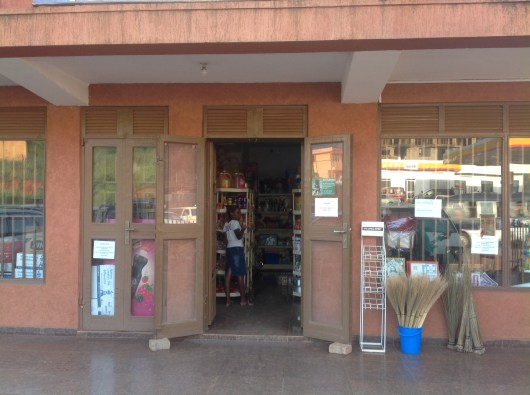
A typical neighborhood supermarket in Kampala, Uganda

From my observation, this is one of the easiest businesses to set up and yet potentially challenging to run. You could choose to directly manage its operations or hire a team to do so. The former option is likely to reduce on the operational headaches by far.

What do you have to consider when setting one up?

  1. Location: The biggest success factor for this business is location. Where you put your supermarket will clearly determine not only the category of clients you attract but also their numbers and frequency of shopping. A supermarket located by the roadside with little or no parking slots for cars had better be near a busy public transport stage. You could also locate it in an affluent suburb or on the road leading to such a suburb from a busy work area of the town. However, in this case, having good parking is a big advantage considering the likely transport mode for most of the middle class families. One of the best locations also is residential areas. Setting up one within an estate or its environs offers a much bigger market guarantee especially if the estate is big in size.

  2. Ground Floor: Wherever the location you settle for, always insist on having the supermarket on the ground floor. Anything short of that will lead you to failure right from the word go. Most Ugandans are not into the habit of climbing stairs just to get stuff done. It is the reason you find most of the storeyed buildings in the city having tenants occupying only the first three floors with the rest being empty. Suppliers also have an easy time when delivering products since having to lift them to higher levels might involve much more labour and time.

  3. Parking: Availability of parking for cars is crucial if you want to reach out to an affluent or mixed client base. Depending on your location, you might want to insist on having parking space near or at the front of the supermarket.

  4. Branding: This can be a complex matter but in the most basic way, simply ensure that you come up with an appealing name and graphics for the business. This process needs to put into consideration your likely target customers and long term plan for the business.

  5. Fittings: Get your internal fittings right. The shelves, cold storage facilities, tables, security among others. The extent of these fittings is determined by the spread of services and products you intend to provide. A basic no frills supermarket intent on merely retailing basic household goods would focus on shelves, a cashier’s table and one or two fridges.

  6. Supply Chain: Supermarkets need suppliers in order to serve their customers. Supplier X brings her baked Cakes, the supermarket displays them on the shelves and customers buy. After sale, the supermarket notifies the supplier to restock as well as receive payment for the previous consignment. The beauty with this is that as you set up the supermarket, suppliers start flocking the venue asking to be registered. So, it is among the easiest to handle.

  7. Human Resource: You need people to run the supermarket. Even when you choose to manage it directly, depending on your scale of operation, there is always that need for a few extra hands to help in:

    • Attending to customers

    • Receiving products from suppliers

    • Security

    • Cleaning the supermarket

    • Managing books of accounts, e.t.c.

  1. License: Get a trading license from the local authorities. This trading license is paid for annually and has to be factored in as one of the recurrent costs.

  2. Business Registration: With things getting tighter in Uganda today, you can hardly open up such a business without having some form of registration. Identify whether you want to register a Private Limited Company, Sole Proprietorship, Partnership or any other mode. This is a pre-requisite in order to get a Tax Identification Number from the Uganda Revenue Authority.

  3. Business Plan: Try to have some form of written business plan. I know, when I talk about this, you’re probably imagining a one hundred page document filled with all sorts of academic brouhaha!!! No. A business plan can be as simple as a three page document listing the key issues and how you plan to deal with or achieve them. In the case of a supermarket, one of the issues you need to address is the products and their pricing.

    • What mark-up do you place on your products and how does the eventual price affect the ability of your target market to purchase?

    • What type of products do you stock? You have no need stocking electronics like Televisions in a supermarket located in a housing estate. That shelf space is better used stocking washing detergents.

    • What product sizes or packaging do you opt for? Detergents like Ariel or Omo are on high demand and purchased by most households. However, the purchase quantities vary from one market segment to another. The affluent moneyed class prefers to buy the One Kilogram or even Five Kilogram packs while the low income households prefer to buy the smaller 100 gram packs. Study your market and stock the right product sizes.

  1. Return Policy: Set a clear policy on product returns. Often times supplied products get expired, damaged or might be defective right from the factory. As a supermarket, you do not have to bear that as a loss, it should be clear to the suppliers that they replace any products that cannot be sold to customers for one reason or another.

  2. Supplier Payments: Most suppliers offer credit to supermarkets save for a very few like Milk and bread suppliers who tend to collect their money upon delivery. However, for those that extend credit, it’s crucial that you have a very organised system of managing them. Some supermarkets settle outstanding invoices every two weeks, thirty days or even forty five days. Others clear each pending invoice upon product depletion on the shelf. Setting up a predictable payment system for the suppliers not only endears you to them but also ensures that you manage your cashflow better. This particular point is the reason Uchumi Supermarket closed operations in Uganda and Nakumatt Supermarket too is currently struggling to remain in business.

  3. Point of Sale System: This is an electronic system used to record transactions at the point of payment in a shop or supermarket. It could be crucial or not depending on your scale of operation. If it’s a small Mom & Pop neighbourhood supermarket that you directly manage, you may start without it. However, for a business you aren’t actively managing, this system will help you so much as it allows you to make daily audits of sales by recording all transactions.

  4. Theft: For as long as you get into this business, expect this to be a sticking issue. Globally, supermarkets put a 3% mark-up on their product pricing to cater for just this. While you can employ technology and other means to reduce its prevalence, theft will always occur. How does it happen?

    • Walk-in customers. There is always an army of people who have made it their livelihood to steal products from supermarket shelves and find their way out without paying. This is one of the reasons you need an extra hand to run the supermarket. They can keep watch over such activities. However, what happens if they collude?

    • Crooked Suppliers. There are cases of suppliers who deliver less than what has been indicated on the invoice. It implies that you pay them for goods that were never supplied in the first case. Matters are made worse when they collude with your staff to make these false declarations.

    • Staff. Internal supermarket staff could also be a source of illicit product loss. They tend to take advantage of the trust bestowed upon them to engage in theft. In bigger supermarkets, they are known to form networks that ensure the untraceability of their illegal activities. The closed Uchumi Supermarket was a glaring example that suffered from internal staff theft.

  1. Money: Finally, have money. While I cannot give you financial estimates, by perusing through the list of issues presented so far, you can get a good idea of what to prioritise and hence determine how much you need to set up the business. The best thing about it all is the fact that product stocking which tends to cost a lot is largely on credit hence reducing the overall initial financial burden.

I hope you are now ready to start that supermarket business. Do not waste any more time. Get at it right away.

James Wire is a Small Business and Technology Consultant based in Kampala, Uganda

Follow @wirejames on Twitter

Other Articles of Interest: